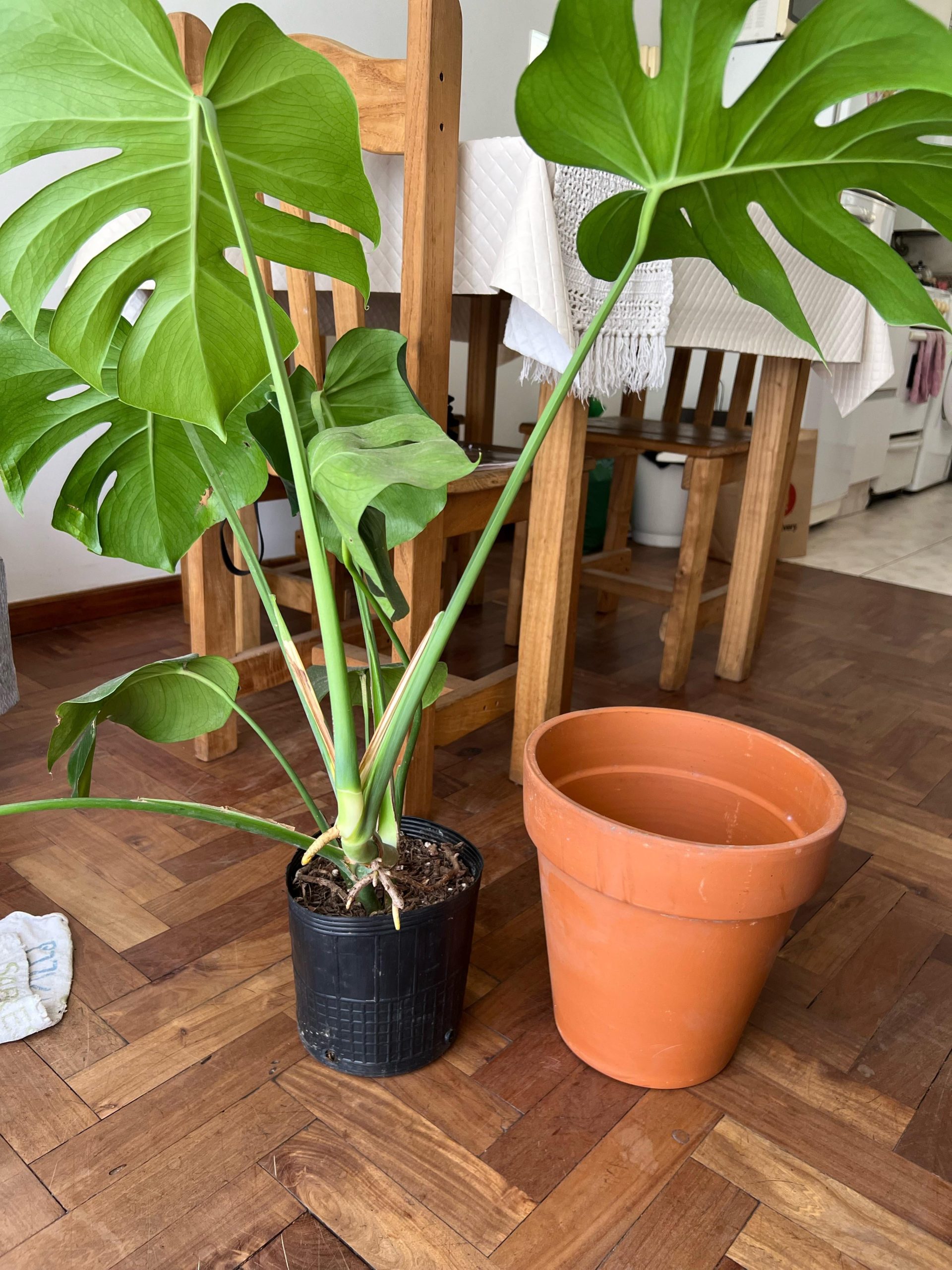
Knowing when to put your Monstera in a bigger pot is crucial. Healthy growth depends on proper timing and care.
Monsteras, with their striking, large leaves and unique appearance, are a favorite among plant enthusiasts. As these plants grow, their roots require more space. If left in a small pot, the Monstera may become root-bound, stunting its growth and health.
Repotting at the right time ensures it has enough room to thrive and continue beautifying your space. In this post, we’ll explore the signs that indicate your Monstera needs a bigger pot and how to successfully repot it. Understanding these steps will help you maintain a happy and healthy plant. Let’s dive into the details and ensure your Monstera gets the best care possible.

Introduction To Monstera Repotting
Monstera plants, known for their stunning, large leaves, bring a touch of the tropics to any home. Repotting your Monstera is crucial for its health and growth. This process allows the roots more space to spread and access nutrients.
Importance Of Repotting
Repotting your Monstera is essential for its well-being. Over time, the plant’s roots outgrow their pot, leading to root-bound conditions. This can stunt growth and reduce the plant’s ability to absorb water and nutrients. Repotting gives roots more room to expand.
Frequent repotting helps refresh the soil. Old soil can lose its nutrient content and become compacted. Fresh soil provides necessary nutrients and better drainage, promoting healthier growth.
Common Repotting Myths
There are myths about repotting that can mislead plant owners. One common myth is that repotting causes stress and damage. While it’s true that repotting can be stressful, doing it correctly minimizes risks. Proper techniques and timing help the plant adapt.
Another myth is that repotting should be done only when the plant is visibly suffering. Waiting too long can harm the Monstera. Regular checks and timely repotting keep the plant thriving. Understanding these myths helps make informed decisions.
Signs Your Monstera Needs A Bigger Pot
Knowing when to repot your Monstera can help it thrive. A bigger pot gives the roots more space to grow. Look for these signs to see if your Monstera needs a bigger pot.
Roots Growing Out Of Drainage Holes
Check the bottom of the pot. Are roots poking out of the drainage holes? This is a clear sign. Your Monstera’s roots need more space. A larger pot will allow them to spread out and support the plant better.
Stunted Growth
Is your Monstera not growing as fast as before? It might be root-bound. When roots have no room to grow, the plant’s growth slows down. Giving your Monstera a bigger pot can help it grow tall and strong again.
Frequent Wilting
Does your Monstera wilt often, even with regular watering? This can mean the roots are crowded. They can’t take up enough water or nutrients. Repotting can help the plant stay healthy and hydrated.
Ideal Pot Size For Monstera
Monstera plants need bigger pots when roots start peeking through the drainage holes. Repot every 1-2 years for healthy growth. Choose a pot 2 inches larger in diameter for best results.
Choosing the right pot for your Monstera is crucial for its growth. If the pot is too small, the roots can become cramped. This can stunt the plant’s growth. On the other hand, a pot that is too large can cause overwatering issues. This can lead to root rot. So, finding the perfect balance is key.Choosing The Right Pot
When selecting a new pot, choose one that is 2-3 inches larger in diameter than the current pot. This allows the roots to spread and grow freely. Ensure the pot has drainage holes. This helps prevent water from sitting at the bottom. A well-draining potting mix is also essential. It allows excess water to escape, keeping the roots healthy.Benefits Of Proper Pot Size
A pot of the right size promotes better root health. Healthy roots lead to a thriving plant. A larger pot also supports the plant’s growth. It provides more space for the Monstera to expand. Proper drainage prevents waterlogging. This reduces the risk of root rot and other issues. Your Monstera will thank you for the extra room to grow. “`Best Time To Repot Monstera
The best time to repot your Monstera can make a big difference. Repotting helps your plant grow strong and healthy. But timing matters. Let’s explore the best time to give your Monstera a new home.
Seasonal Considerations
Spring is the best season for repotting Monsteras. The plant is entering its growing phase. Repotting in spring gives the plant time to adjust. It can grow new roots and leaves easily. Avoid repotting in winter. The plant is usually dormant during this time. Repotting in winter can stress the plant.
Growth Cycles
Look at your Monstera’s growth cycle. When it grows fast, it needs more space. Check the roots. If they are coming out of the pot, it’s time. A cramped pot can stunt its growth. When you see new leaves and roots, your Monstera is ready. Repotting helps the plant grow even more. A bigger pot gives it room to spread.
Preparing For Repotting
Monstera needs a bigger pot when roots start circling the pot’s bottom. Yellowing leaves and stunted growth are also signs. Repot in spring for best results.
Repotting your Monstera plant is a crucial step to ensure it remains healthy and continues to grow. Proper preparation makes the process smooth and stress-free. This section covers the key steps to get ready for repotting your beloved Monstera.Gathering Supplies
Start by gathering all necessary supplies. You will need a new pot, fresh soil, and some tools. Choose a pot that is 2-3 inches larger in diameter than the current one. This gives your Monstera room to grow. Next, gather tools like a trowel, gloves, and scissors. These help you handle the plant and soil easily. Having everything ready makes the process efficient.Soil And Fertilizer Selection
Select the right soil for your Monstera. Well-draining soil is essential. A mix designed for tropical plants works best. Look for soil that retains moisture but drains excess water. Consider adding fertilizer to the soil. A balanced, slow-release fertilizer provides nutrients for healthy growth. Mix it into the soil before placing your Monstera in the new pot. Preparing for repotting helps ensure your Monstera thrives in its new environment. Follow these steps, and your plant will thank you. “`
Step-by-step Repotting Guide
Repotting your Monstera can improve its health. Follow this step-by-step repotting guide to ensure your plant thrives. This guide will cover each step, making it easy to understand and follow.
Removing The Monstera
First, gently remove the Monstera from its current pot. Hold the plant at the base and carefully tip the pot sideways. If the plant is stuck, tap the sides of the pot to loosen the soil.
Next, inspect the roots. Trim any damaged or rotten roots with clean scissors. This step helps prevent disease and encourages healthy growth.
Placing In New Pot
Choose a new pot that is 2 inches larger in diameter than the old one. Ensure the pot has drainage holes to prevent waterlogging. Add a layer of fresh soil at the bottom of the new pot.
Place the Monstera in the center of the pot. Fill in the gaps around the roots with more fresh soil. Press the soil down gently to remove air pockets, ensuring the plant is stable.
Watering After Repotting
After repotting, water the Monstera thoroughly. The soil should be moist but not soggy. Allow excess water to drain out of the bottom of the pot.
Keep the plant in a warm, bright spot with indirect sunlight. Avoid direct sunlight, which can stress the plant. Monitor the soil moisture and water when the top inch feels dry.
Post-repotting Care
Repotting your Monstera is a big step in its growth journey. After repotting, the plant needs special care to adjust to its new home. This care ensures your Monstera continues to thrive.
Monitoring For Shock
After repotting, your Monstera might experience some shock. Watch for signs like drooping leaves or slowed growth. These are normal but need attention.
To help your plant recover:
- Place it in a spot with indirect sunlight.
- Keep the temperature stable and avoid drafts.
- Do not fertilize immediately. Wait a few weeks.
Adjusting Watering Schedule
Your Monstera’s watering needs change after repotting. The new soil retains water differently. Adjusting your watering schedule is crucial.
Follow these steps:
- Check the soil moisture regularly. Use your finger or a moisture meter.
- Water when the top 2 inches of soil are dry.
- Avoid overwatering to prevent root rot.
Over time, you will find the right balance for your Monstera.

Troubleshooting Common Repotting Issues
Repotting your Monstera can be tricky. Even experienced plant parents face challenges. Identifying and addressing issues early helps your Monstera thrive.
Yellowing Leaves
Yellowing leaves often indicate stress. This could be due to overwatering, poor drainage, or root damage during repotting. Check the soil moisture. If it’s too wet, let it dry out a bit. Ensure your pot has drainage holes. If roots look brown and mushy, trim them carefully.
Wilting After Repotting
Wilting after repotting is common. It usually means the plant is in shock. Give your Monstera time to adjust. Place it in a shaded area with indirect light. Water it lightly. Avoid overwatering to prevent root rot. Mist the leaves to keep humidity levels up.
Conclusion And Final Tips
Repotting a Monstera can be vital for its health and growth. Knowing when to transfer it to a bigger pot ensures your plant thrives. Below are some final tips to help you.
Ensuring Healthy Growth
To ensure your Monstera grows well, check these signs:
- Roots are visible through the drainage holes.
- Soil dries out quickly after watering.
- Plant looks top-heavy or unstable.
If any of these signs appear, it’s time to repot your Monstera.
Long-term Care Strategies
After repotting, follow these strategies for long-term care:
- Use a pot with proper drainage.
- Choose the right soil mix, like peat-based or well-draining soil.
- Water the plant thoroughly but allow the soil to dry between waterings.
- Place the Monstera in a spot with indirect sunlight.
- Fertilize monthly during the growing season.
These steps will keep your Monstera healthy and thriving.
Keep an eye on your plant’s needs. With proper care, your Monstera will grow beautifully.
Frequently Asked Questions
When Should I Repot My Monstera Plant?
Repot your Monstera when roots outgrow the current pot. Typically, this is every 1-2 years. Early spring is ideal.
How Do I Know If Monstera Needs A Bigger Pot?
Check for roots growing out of drainage holes. Also, slow growth and drying soil are signs.
What Size Pot Is Best For Monstera?
Choose a pot 2 inches larger in diameter than the current one. Ensure it has drainage holes.
Can I Repot Monstera In Winter?
It’s best to avoid winter repotting. Monstera growth slows down, making it less ideal for repotting.
Conclusion
Repotting your Monstera ensures healthy growth and vibrant leaves. Check the roots regularly. When roots outgrow the pot, it’s time to repot. Choose a pot 2 inches larger than the current one. Use fresh, well-draining soil. Water thoroughly after repotting.
Provide proper light and care for best results. Regularly monitor your plant’s growth. Repotting helps your Monstera thrive. Happy planting!
Leave a Reply