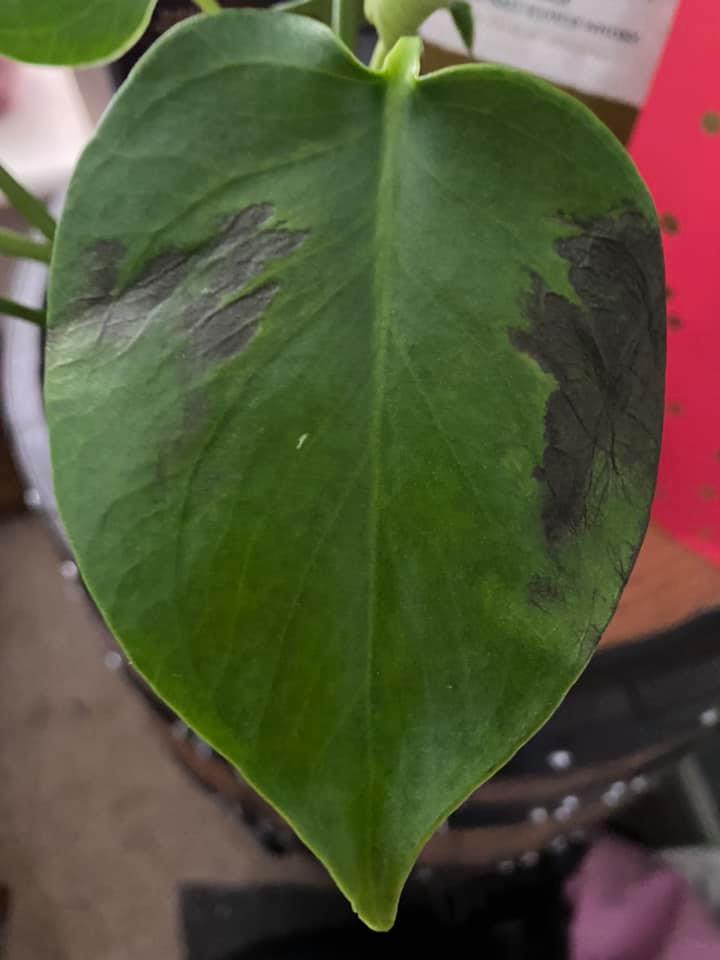
Seeing your Monstera leaves turn black can be alarming. This common issue requires quick action to save your plant.
Monstera plants, known for their striking leaves, bring a touch of the tropics to your home. But when those beautiful leaves start turning black, it signals that something is wrong. Black leaves can be a sign of various issues, such as overwatering, poor drainage, or even a lack of humidity.
Understanding the cause is the first step to reviving your Monstera. In this post, we’ll explore the reasons behind black leaves and provide simple solutions to help your plant recover. By taking the right steps, you can restore your Monstera to its lush, green glory.
Causes Of Black Monstera Leaves
Monstera plants are known for their beautiful, large leaves. But sometimes, these leaves can turn black. Understanding the causes of black Monstera leaves is crucial for keeping your plant healthy. Let’s explore some common reasons and environmental factors that might be affecting your Monstera plant.
Common Reasons
Several common reasons can cause Monstera leaves to turn black. Identifying these reasons can help you take the right steps to fix the problem.
- Overwatering: Too much water can drown the roots. This prevents oxygen from reaching the plant.
- Underwatering: Not enough water can cause the leaves to dry out and turn black.
- Poor Drainage: If the soil does not drain well, water can accumulate. This can lead to root rot.
- Pest Infestation: Pests like spider mites can damage the leaves, causing them to turn black.
- Nutrient Deficiency: Lack of essential nutrients can make the leaves weak. This can result in black spots.
Environmental Factors
The environment in which your Monstera plant lives also plays a big role. Factors like light, temperature, and humidity can affect the health of the leaves.
| Factor | Effect on Leaves |
|---|---|
| Light | Too much direct sunlight can burn the leaves, causing black spots. Too little light can weaken the plant. |
| Temperature | Extreme temperatures can stress the plant. Both hot and cold temperatures can cause black leaves. |
| Humidity | Low humidity can dry out the leaves. High humidity can cause fungal infections. |
By understanding these common reasons and environmental factors, you can better care for your Monstera plant. This will help you keep its leaves healthy and green.
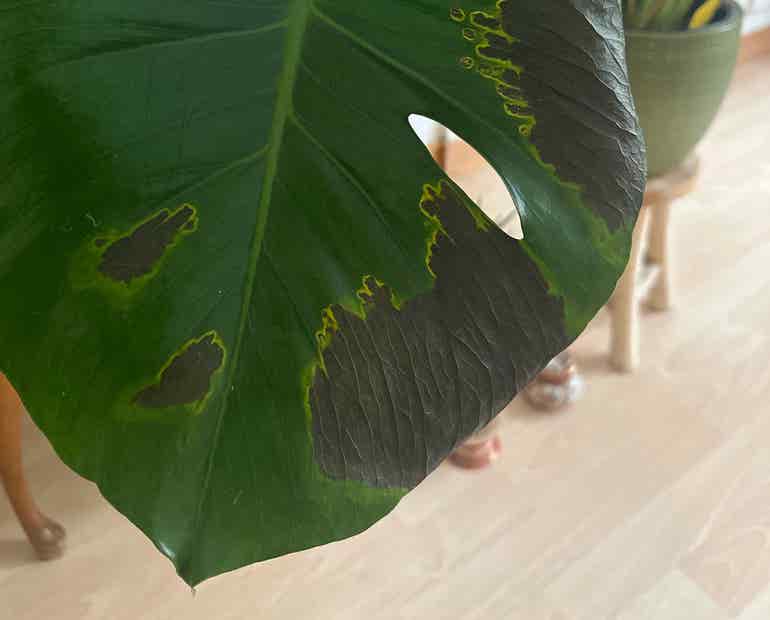
Identifying Black Leaf Symptoms
Monstera plants are a popular choice for indoor greenery. But, black leaves can be alarming. It’s crucial to identify the symptoms early. This helps to address the problem before it worsens. Let’s look at how to spot these symptoms and differentiate them from other issues.
Spotting Early Signs
Early detection is key to saving your Monstera plant. Look for the following signs:
- Black spots that appear on the edges of the leaves.
- Spots may be small at first but can spread quickly.
- Wilting or drooping leaves.
- Leaves might feel soft or mushy to the touch.
Spotting these early signs can help you take quick action.
Differentiating From Other Issues
Black leaves can be confused with other problems. Here’s how to tell the difference:
| Issue | Symptoms |
|---|---|
| Black Leaf Spots | Black or dark brown spots, usually starting at the edges. |
| Yellowing Leaves | Leaves turn yellow before falling off, not black. |
| Root Rot | Soft, mushy stems and a foul smell from the soil. |
Understanding these differences helps to diagnose the problem correctly.
Watering Practices
Monstera plants are popular for their unique, large leaves. But, improper watering can cause their leaves to turn black. Understanding the right watering practices can help keep your Monstera healthy and vibrant. Let’s explore the best ways to water your Monstera plant.
Proper Watering Techniques
Using the correct watering techniques is crucial. First, ensure the soil is evenly moist. Water your Monstera until water drains from the bottom of the pot. This ensures the roots get enough moisture. Use room temperature water for the best results.
Check the soil before watering again. Insert your finger about an inch into the soil. If it feels dry, it’s time to water. If it feels moist, wait a few days.
Avoiding Overwatering
Overwatering can lead to root rot and black leaves. To avoid this, ensure the pot has good drainage. Use a pot with drainage holes at the bottom. This helps excess water escape and prevents water from sitting around the roots.
Watering your Monstera on a schedule can be helpful. But remember, the plant’s needs may change with seasons. In winter, Monsteras need less water. Adjust your watering schedule accordingly.
Signs Of Overwatering
| Sign | Description |
|---|---|
| Yellow Leaves | Leaves turn yellow before turning black. |
| Soft, Mushy Stems | Stems become soft and may break easily. |
| Musty Smell | The soil may emit a musty odor. |
Tips For Watering Monsteras
- Use a moisture meter to check soil moisture levels.
- Ensure the potting mix is well-draining.
- Water less frequently in winter.
- Avoid letting the plant sit in water.
Following these tips can help prevent black leaves and keep your Monstera thriving. Proper watering practices are essential for a healthy Monstera.
Soil And Drainage
Are the leaves of your Monstera plant turning black? The problem could be in the soil and drainage. Ensuring your plant has the right soil and proper drainage is crucial. It helps prevent black leaves and other issues. Let’s dive into the details.
Choosing The Right Soil
The right soil can make a big difference. Monstera plants prefer a mix that drains well yet retains some moisture. Look for a high-quality potting mix. It should contain ingredients like:
- Peat moss
- Perlite
- Orchid bark
A good mix ensures roots get enough air. It also prevents water from sitting too long. This helps avoid root rot, a common cause of black leaves.
Ensuring Good Drainage
Proper drainage is key to healthy Monstera plants. Pots with drainage holes are essential. They allow excess water to escape. Without them, water can pool at the bottom. This leads to root rot and black leaves.
Consider using a saucer under your pot. It catches excess water and protects surfaces. Just be sure to empty it regularly.
Here’s a quick checklist to ensure good drainage:
- Choose pots with drainage holes.
- Use a well-draining soil mix.
- Elevate pots slightly to allow airflow.
- Check for water buildup in saucers.
By paying attention to soil and drainage, you can keep your Monstera healthy. Prevent black leaves and enjoy a thriving plant.
Humidity And Temperature
Monstera leaves turning black can be concerning. Often, the problem lies in humidity and temperature. Ensuring the right environment is crucial for healthy leaves.
Ideal Humidity Levels
Monsteras thrive in humid conditions. Aim for a humidity level between 60% and 80%. Dry air can cause black spots on the leaves. Use a humidifier to maintain the right levels. Alternatively, place a water tray near the plant. Mist the leaves regularly to boost humidity.
Check the humidity level with a hygrometer. Adjust your methods based on the readings. Too much humidity can also cause issues. Balance is key for a healthy Monstera.
Temperature Requirements
Monsteras prefer warm temperatures. Keep your plant in a range of 65°F to 85°F (18°C to 29°C). Avoid placing it near drafts or air vents. Sudden temperature changes can stress the plant. Stress leads to black leaves.
In colder months, ensure the room stays warm. Use a space heater if needed. Maintain a stable environment for the best results.
Avoid placing your Monstera in direct sunlight. Too much sun can scorch the leaves, causing black spots. Filtered light is ideal for these tropical plants.
Monitor the room’s temperature regularly. Make adjustments as necessary to keep your Monstera happy and healthy.
Light Conditions
Monstera plants are popular for their large, unique leaves. But sometimes, these leaves can turn black. One of the key factors to consider is light conditions. Proper light is essential for the health of your Monstera.
Optimal Light For Monstera
Monsteras thrive in bright, indirect light. Direct sunlight can harm the leaves. Place your plant near a window with filtered light. You can use sheer curtains to soften direct rays. This will help the leaves stay healthy and vibrant.
If your Monstera is in a low light area, it may not grow well. The leaves might become smaller and lose their unique holes. Consider using a grow light if natural light is limited. Ensure the light mimics natural daylight for best results.
Preventing Light Stress
Light stress can cause Monstera leaves to turn black. Too much light can scorch the leaves. Too little light can weaken the plant. Monitor the light conditions in your home. Adjust the plant’s location if needed.
Sudden changes in light can also stress the plant. Gradually introduce your Monstera to new light conditions. This helps it adapt without shock. Check the leaves regularly for signs of stress. Healthy leaves mean a happy plant.
Pruning And Maintenance
Pruning and maintenance are essential for keeping your Monstera plant healthy. If Monstera leaves turn black, it could be a sign of poor plant health. Regular pruning and proper maintenance help prevent further damage and promote new growth.
Removing Damaged Leaves
Black leaves on a Monstera plant indicate a problem. You should remove these leaves to prevent the spread of disease. Use clean, sharp scissors or pruners for this task.
Here are the steps:
- Identify the blackened leaves.
- Cut the leaf stem close to the base.
- Dispose of the cut leaves properly.
- Clean your tools with alcohol after pruning.
Removing damaged leaves helps the plant focus on healthy growth. It’s a simple yet effective way to maintain your Monstera.
Regular Plant Care
Consistent care is important for preventing issues like black leaves. Here are some regular care tips:
- Watering: Water the plant when the top inch of soil is dry.
- Light: Place the plant in bright, indirect sunlight.
- Humidity: Maintain a humid environment around the plant.
- Feeding: Use a balanced fertilizer once a month during the growing season.
Regular plant care keeps your Monstera healthy and vibrant. Neglecting these basics can lead to issues like black leaves.
For a quick overview, refer to the table below:
| Care Aspect | Guideline |
|---|---|
| Watering | Top inch of soil dry |
| Light | Bright, indirect sunlight |
| Humidity | Maintain high humidity |
| Feeding | Balanced fertilizer monthly |
Following these guidelines ensures your Monstera thrives and stays healthy.
Pest And Disease Management
Dealing with black Monstera leaves can be frustrating. Often, pests and diseases are the culprits. Effective management of these issues is crucial. Let’s explore some common pests and how to prevent diseases.
Common Pests
Monstera plants can attract various pests. These pests can cause leaves to turn black. Here are some common ones:
- Spider Mites: Tiny, spider-like creatures that feed on plant sap. They leave webbing on leaves.
- Aphids: Small, soft-bodied insects that cluster on new growth. They can cause leaves to curl and discolor.
- Mealybugs: White, cotton-like pests that suck plant juices. They often hide in leaf joints.
Regularly inspect your Monstera for these pests. Early detection is key.
Disease Prevention
Diseases can also cause Monstera leaves to turn black. Prevention is better than cure. Follow these tips:
- Proper Watering: Avoid overwatering. Ensure the soil drains well.
- Good Air Circulation: Place your Monstera in a spot with good airflow.
- Clean Tools: Sterilize pruning tools before use. This prevents disease spread.
Monitor your plant’s health regularly. Remove any infected leaves promptly. This helps prevent the spread of disease.
Nutrient Needs
Ensuring your Monstera plant gets the right nutrients is crucial for its health. Black leaves can be a sign of nutrient deficiencies. Understanding these needs helps keep your Monstera thriving.
Fertilizing Tips
Proper fertilization is key to a healthy Monstera. Use a balanced, water-soluble fertilizer. Apply it every month during the growing season. Avoid over-fertilizing, as this can harm the plant.
- Use a 20-20-20 fertilizer for balanced nutrition.
- Mix the fertilizer at half strength to avoid root burn.
- Water the plant before and after fertilizing to help absorption.
Recognizing Nutrient Deficiencies
Recognizing nutrient deficiencies is important. Different deficiencies show unique symptoms. Here are common nutrient deficiencies that might affect your Monstera:
| Nutrient | Deficiency Symptoms |
|---|---|
| Nitrogen | Yellowing leaves, stunted growth |
| Phosphorus | Dark green or purplish leaves |
| Potassium | Yellow edges, brown spots |
Address these deficiencies by adjusting your fertilization routine. Use specific fertilizers if needed. Keep monitoring your plant’s health regularly.
Reviving A Stressed Monstera
Monstera plants are loved for their unique, large leaves. But, what do you do if these beautiful leaves start turning black? Black leaves can be a sign of stress in your Monstera. There could be several reasons behind this, and the key is to identify and address them quickly. Let’s explore the steps to recovery and long-term care strategies to bring your Monstera back to health.
Steps To Recovery
Start by examining the plant’s environment. Check the light, water, and soil conditions.
- Light: Ensure the plant gets bright, indirect sunlight. Direct sunlight can scorch leaves.
- Water: Overwatering is a common cause of black leaves. Check if the soil is soggy. If so, let it dry out before watering again.
- Soil: Use well-draining soil. This helps to prevent root rot.
Next, inspect the plant for pests or diseases. Treat with appropriate solutions if any are found. Trim the black leaves using clean scissors to encourage new growth.
Long-term Care Strategies
To prevent future stress, maintain a consistent care routine.
- Watering: Water only when the top inch of soil is dry. This prevents overwatering.
- Humidity: Monsteras love humidity. Use a humidifier or mist the leaves regularly.
- Fertilizing: Feed your Monstera monthly during the growing season with a balanced fertilizer. This promotes healthy growth.
- Pruning: Regularly prune to remove dead or damaged leaves. This helps the plant focus its energy on healthy parts.
By following these steps, your Monstera can recover from stress and thrive. A happy Monstera will reward you with lush, beautiful leaves.

Frequently Asked Questions
Why Are My Monstera Leaves Turning Black?
Monstera leaves turn black due to overwatering, poor drainage, or low humidity. Ensure proper watering practices and maintain good drainage. Increase humidity levels around the plant.
How Can I Fix Black Spots On Monstera?
Fix black spots by cutting off affected leaves, improving watering habits, and increasing humidity. Regularly check for pests and diseases.
What Does Blackening Monstera Leaves Indicate?
Blackening Monstera leaves indicate overwatering, poor drainage, or low humidity. Address these issues promptly to prevent further damage.
Can Pests Cause Monstera Leaves To Turn Black?
Yes, pests like spider mites can cause Monstera leaves to turn black. Regularly inspect your plant for pests and treat accordingly.
Conclusion
Black Monstera leaves can be a sign of stress. Identify the cause quickly. Overwatering, pests, or low humidity might be the issue. Adjust care routine accordingly. Trim damaged leaves to promote new growth. Keep the plant in indirect light. Ensure proper soil drainage.
Monitor the plant’s health regularly. Healthy Monstera leaves are bright and vibrant. Proper care can restore your plant. Enjoy your thriving Monstera!
Leave a Reply