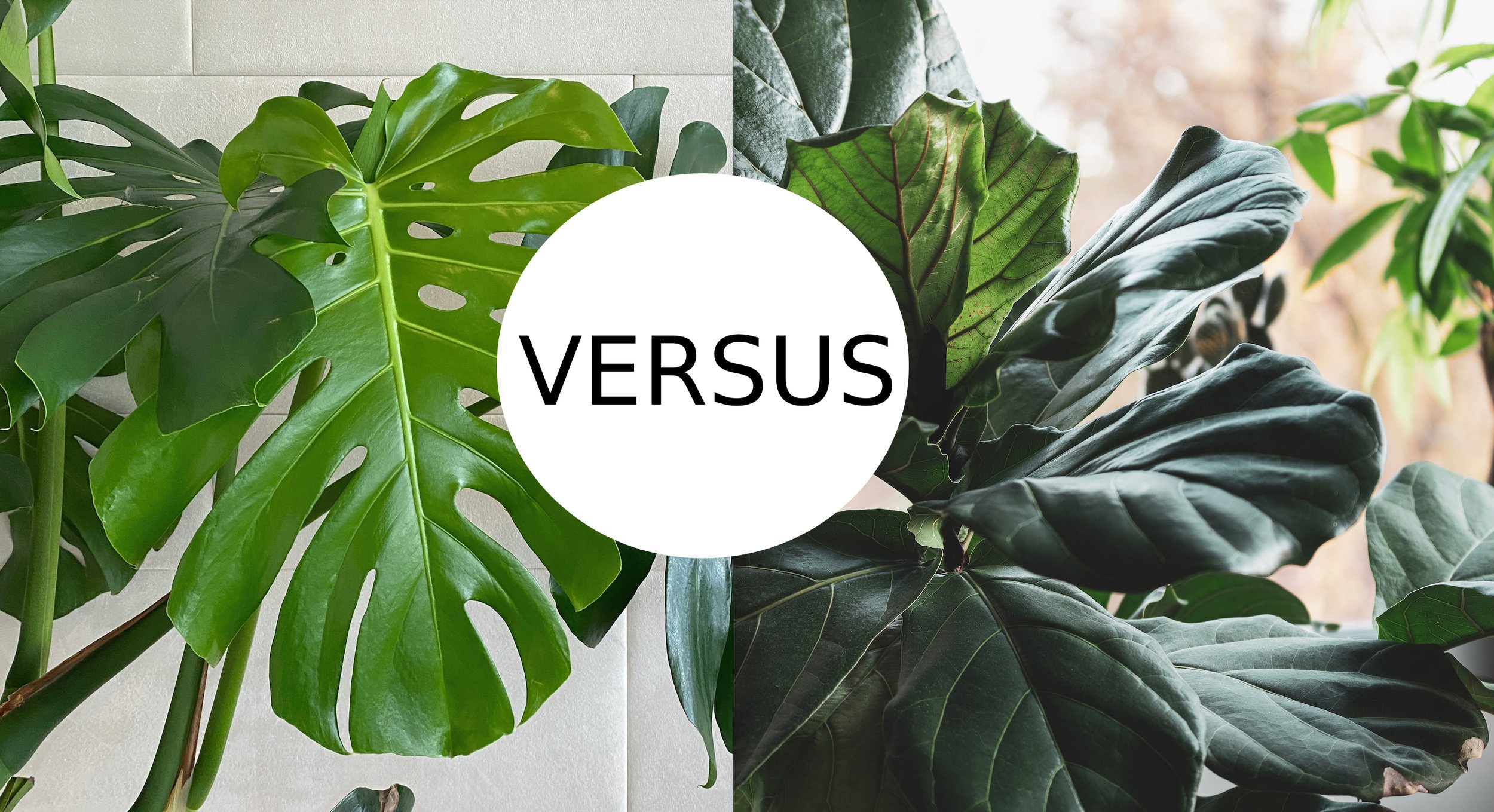
Monstera and Fiddle Leaf Fig are two popular houseplants. Both have unique features and beauty.
Choosing the right plant can be challenging. Monstera, with its striking split leaves, and the Fiddle Leaf Fig, known for its large, leathery leaves, each offer something special. Understanding the differences helps in making an informed decision. This comparison will guide you through their care needs, aesthetic appeal, and growth patterns.
Whether you’re a plant enthusiast or a beginner, this guide will help you decide which plant suits your space and lifestyle best. Let’s dive into the fascinating world of Monstera and Fiddle Leaf Fig to find out which one is perfect for you.

Monstera Overview
The Monstera plant is a favorite among indoor plant enthusiasts. Its large, glossy leaves and unique appearance make it a standout in any room.
Origin And History
Monstera plants originate from the tropical forests of Central and South America. They thrive in warm, humid environments. These plants have a rich history. Indigenous people used them for medicinal purposes and food.
European explorers discovered the Monstera in the 18th century. They brought it back to Europe, where it became popular as an ornamental plant. Today, it is a common sight in homes and offices worldwide.
Key Characteristics
Monstera plants are known for their large, perforated leaves. These leaves can grow up to three feet wide. The holes in the leaves are a natural adaptation. They help the plant withstand strong winds and heavy rainfall in its native habitat.
Monstera plants are climbers. In the wild, they use aerial roots to climb trees and structures. These roots can also absorb moisture and nutrients from the air. This makes the Monstera a hardy plant, able to survive in various conditions.
Another notable feature is its fruit. The Monstera fruit is edible and tastes like a mix of pineapple and banana. However, it is rarely seen in indoor plants.
Here’s a quick overview of its key characteristics:
| Characteristic | Details |
|---|---|
| Leaf Size | Up to 3 feet wide |
| Leaf Shape | Large, perforated |
| Native Region | Central and South America |
| Growth Habit | Climbing |
| Fruit | Edible, rare indoors |
The Monstera is not just beautiful. It is also easy to care for, making it ideal for beginners.

Fiddle Leaf Fig Overview
The Fiddle Leaf Fig (Ficus lyrata) is a popular indoor plant. Its large, glossy leaves make it a favorite among plant enthusiasts. This section provides a detailed overview of this stunning plant.
Origin And History
The Fiddle Leaf Fig originates from Western Africa. It thrives in tropical rainforests, where it grows tall under the canopy. Discovered in the 18th century, it quickly became a popular ornamental plant. Its unique, fiddle-shaped leaves set it apart from other plants.
Key Characteristics
The Fiddle Leaf Fig has several distinct features. It can grow up to 10 feet tall indoors. Its leaves are large, dark green, and glossy, often reaching up to 18 inches in length. These leaves have prominent veins and a leathery texture.
- Height: Up to 10 feet indoors
- Leaf Size: Up to 18 inches long
- Leaf Color: Dark green and glossy
- Leaf Shape: Fiddle-shaped with prominent veins
Fiddle Leaf Figs prefer bright, indirect light. They need consistent watering, but the soil should not be waterlogged. These plants can adapt to various indoor environments, making them a versatile choice for plant lovers.
Growth And Care Requirements
The Monstera and the Fiddle Leaf Fig are popular houseplants. Both have unique needs to thrive. Understanding their growth and care requirements will help you keep them healthy and beautiful.
Monstera Care Tips
Monsteras are known for their large, split leaves. They are tropical plants that need special care to grow well.
- Light: Monsteras prefer bright, indirect light. Avoid direct sunlight, which can burn their leaves.
- Water: Water your Monstera when the top inch of soil is dry. Overwatering can lead to root rot.
- Humidity: These plants thrive in high humidity. Mist the leaves regularly or use a humidifier.
- Soil: Use well-draining soil. A mix of potting soil, peat moss, and perlite works well.
- Temperature: Monsteras prefer temperatures between 65-85°F (18-29°C).
- Fertilizing: Feed your Monstera with a balanced liquid fertilizer once a month during the growing season.
Fiddle Leaf Fig Care Tips
Fiddle Leaf Figs are known for their large, violin-shaped leaves. They can be a bit fussy, but with the right care, they can grow beautifully.
- Light: Fiddle Leaf Figs need bright, indirect light. They can tolerate some direct sunlight.
- Water: Water your Fiddle Leaf Fig when the top inch of soil is dry. Ensure the pot has good drainage.
- Humidity: These plants prefer moderate humidity. Mist the leaves or place a tray of water nearby.
- Soil: Use a well-draining potting mix. A mix of peat moss and perlite is ideal.
- Temperature: Fiddle Leaf Figs like temperatures between 60-75°F (16-24°C).
- Fertilizing: Feed your Fiddle Leaf Fig with a liquid fertilizer every month during the growing season.
| Care Aspect | Monstera | Fiddle Leaf Fig |
|---|---|---|
| Light | Bright, indirect light | Bright, indirect light |
| Water | When top inch of soil is dry | When top inch of soil is dry |
| Humidity | High humidity | Moderate humidity |
| Soil | Well-draining | Well-draining |
| Temperature | 65-85°F (18-29°C) | 60-75°F (16-24°C) |
| Fertilizing | Monthly during growing season | Monthly during growing season |
Light And Water Needs
Choosing between a Monstera and a Fiddle Leaf Fig can be challenging. Both plants have unique needs for light and water. Understanding these needs will help you decide which plant fits your lifestyle and home environment better.
Monstera Light And Watering
The Monstera thrives in bright, indirect light. Direct sunlight can scorch its leaves. If you notice yellow leaves, it may need more light. Conversely, brown edges can signal too much direct sunlight.
When it comes to watering, Monsteras prefer soil that is kept slightly moist. Water the plant when the top inch of soil feels dry. Overwatering can lead to root rot, so ensure the pot has good drainage. In winter, reduce watering as the plant’s growth slows.
| Light Needs | Watering Needs |
|---|---|
| Bright, indirect light | Water when top inch of soil is dry |
| Avoid direct sunlight | Reduce watering in winter |
Fiddle Leaf Fig Light And Watering
The Fiddle Leaf Fig requires lots of bright, indirect light. It can tolerate some direct sunlight but not for extended periods. Insufficient light can cause its leaves to drop.
For watering, Fiddle Leaf Figs prefer a consistent schedule. Water them when the top inch of soil is dry. Overwatering is a common issue, leading to brown spots on the leaves. Ensure the pot has proper drainage to avoid waterlogging.
- Light Needs:
- Bright, indirect light
- Tolerates some direct sunlight
- Avoid low light conditions
- Watering Needs:
- Water when top inch of soil is dry
- Consistent watering schedule
- Avoid overwatering
Aesthetic Appeal
The aesthetic appeal of indoor plants can transform any living space. Two popular choices are Monstera and Fiddle Leaf Fig. Both offer unique visual charms, enhancing the beauty of your home. Let’s explore their distinct looks.
Monstera Visual Impact
Monstera plants are known for their large, glossy leaves. These leaves have natural holes, making them unique. The vibrant green color brightens any room. Monstera’s sprawling growth adds a tropical feel. This plant creates a lush, jungle-like ambiance.
Fiddle Leaf Fig Visual Impact
The Fiddle Leaf Fig stands out with its tall, upright form. Its large, violin-shaped leaves are a striking feature. The dark green foliage adds elegance to any space. This plant fits well in modern and minimalist interiors. Its bold presence makes it a focal point in any room.

Common Problems
Both Monstera and Fiddle Leaf Fig are popular houseplants. But they come with their own set of challenges. Understanding the common problems can help you maintain their health and beauty. Let’s dive into the issues you might face with these plants.
Monstera Issues
Monstera plants are generally hardy, but they can suffer from a few problems. One common issue is yellowing leaves. This often means overwatering or poor drainage. Make sure the soil is well-draining and don’t water too often.
Another problem is brown spots on the leaves. This can be a sign of underwatering or low humidity. Increase humidity around the plant or water it more frequently. Pests can also be a problem. Watch out for spider mites and scale insects. Regularly inspect your plant and use insecticidal soap if needed.
Fiddle Leaf Fig Issues
Fiddle Leaf Figs can be finicky and prone to several problems. One common issue is leaf drop. This can happen due to sudden changes in environment or improper watering. Make sure to keep the environment stable and water consistently.
Another problem is brown edges on the leaves. This can indicate low humidity or inconsistent watering. Increase humidity and ensure you are watering evenly. Root rot is also a concern. It usually happens due to overwatering. Make sure the soil drains well and avoid letting the plant sit in water.
Best Plant For Your Home
Choosing the best plant for your home can be a delightful yet challenging task. The Monstera and the Fiddle Leaf Fig are two popular choices. Each offers unique benefits and aesthetics. To help you decide, let’s dive into the factors you should consider and how to make the final decision.
Factors To Consider
- Light Requirements: Monstera thrives in indirect light. Fiddle Leaf Fig needs bright, indirect light.
- Watering Needs: Monstera prefers moderate watering. Fiddle Leaf Fig needs consistent moisture.
- Growth Potential: Monstera can grow large and sprawling. Fiddle Leaf Fig grows tall and upright.
- Maintenance: Monstera is relatively low-maintenance. Fiddle Leaf Fig requires more care.
| Factors | Monstera | Fiddle Leaf Fig |
|---|---|---|
| Light Requirements | Indirect light | Bright, indirect light |
| Watering Needs | Moderate | Consistent moisture |
| Growth Potential | Large and sprawling | Tall and upright |
| Maintenance | Low-maintenance | More care required |
Making The Final Decision
To make the final decision, consider your home’s environment and your lifestyle. If your home has plenty of indirect light and you prefer a low-maintenance plant, the Monstera might be the best fit.
On the other hand, if you can provide bright, indirect light and enjoy the process of caring for your plants, the Fiddle Leaf Fig could be your ideal choice. Think about the space you have available. Monsteras can spread out and fill large spaces, whereas Fiddle Leaf Figs grow vertically and can fit in narrower spots.
Ultimately, both plants can thrive with the right care. Choose the one that aligns best with your home’s conditions and your personal preferences.
Frequently Asked Questions
What Are The Main Differences Between Monstera And Fiddle Leaf Fig?
Monstera has split leaves with holes, while Fiddle Leaf Fig has large, violin-shaped leaves. Monstera grows faster and climbs, whereas Fiddle Leaf Fig prefers a more upright growth pattern.
Which Plant Is Easier To Care For?
Monstera is generally easier to care for. It tolerates lower light and less frequent watering. Fiddle Leaf Fig requires more consistent light and watering.
Can Monstera And Fiddle Leaf Fig Grow Indoors?
Yes, both plants can grow indoors. Monstera thrives in indirect light, while Fiddle Leaf Fig needs bright, filtered light.
How Often Should I Water Monstera And Fiddle Leaf Fig?
Water Monstera when the top inch of soil is dry. Fiddle Leaf Fig needs watering when the top 2-3 inches are dry.
Conclusion
Choosing between Monstera and Fiddle Leaf Fig depends on your needs. Monstera offers dramatic leaves and easy care. Fiddle Leaf Fig provides elegance but needs more attention. Both plants add beauty to any space. Assess your home environment first. Light and humidity are key factors.
Think about maintenance and growth. Monstera suits busy lifestyles. Fiddle Leaf Fig fits dedicated plant lovers. Either way, you’ll enjoy a lovely green addition. Happy planting!
Leave a Reply