
Monstera Adansonii is a popular houseplant known for its unique leaves. It adds a touch of nature to any space with minimal effort.
In this Monstera Adansonii Care Guide, we’ll walk you through everything you need to know to keep your plant healthy and thriving. From the right lighting to watering tips, this guide covers it all. Monstera Adansonii, also known as the Swiss cheese plant, is loved for its striking, hole-filled leaves.
It’s relatively easy to care for, making it perfect for both beginners and seasoned plant enthusiasts. Understanding its needs can make a big difference in its growth and appearance. So, get ready to dive into the world of Monstera Adansonii care and make your plant the star of your home.
Introduction To Monstera Adansonii
Monstera Adansonii, also known as the Swiss Cheese Plant, is a popular houseplant. It is loved for its unique, hole-filled leaves. This plant is easy to care for and adds a tropical vibe to any room. With the right care, it will thrive and grow beautifully.
Light Requirements
Monstera Adansonii prefers bright, indirect light. Too much direct sunlight can burn its leaves. Low light conditions may slow its growth. Place it near a window with filtered light for best results.
Watering Schedule
Water the Monstera Adansonii when the top inch of soil feels dry. Overwatering can lead to root rot, so be careful. Underwatering can cause the leaves to turn yellow. A consistent watering schedule is key to a healthy plant.
Humidity Needs
This plant loves high humidity. Dry air can cause its leaves to brown at the edges. Mist the leaves regularly or use a humidifier. Placing the pot on a tray of pebbles and water can also help increase humidity.
Soil Preferences
Monstera Adansonii thrives in well-draining soil. A mix of potting soil, peat, and perlite works well. Avoid heavy soils that retain too much water. Good drainage prevents root rot and keeps the plant healthy.
Fertilize the Monstera Adansonii every month during the growing season. Use a balanced, water-soluble fertilizer. Reduce feeding in the winter months. Over-fertilizing can harm the plant, so follow the package instructions.
Pruning And Propagation
Prune the plant to control its size and shape. Use clean, sharp scissors to cut back stems. You can propagate cuttings in water or soil. New roots will form in a few weeks, giving you new plants to enjoy.
Common Pests And Problems
Watch out for pests like spider mites and aphids. Use insecticidal soap to treat infestations. Yellowing leaves can indicate overwatering or nutrient deficiencies. Adjust care routines to solve these issues.
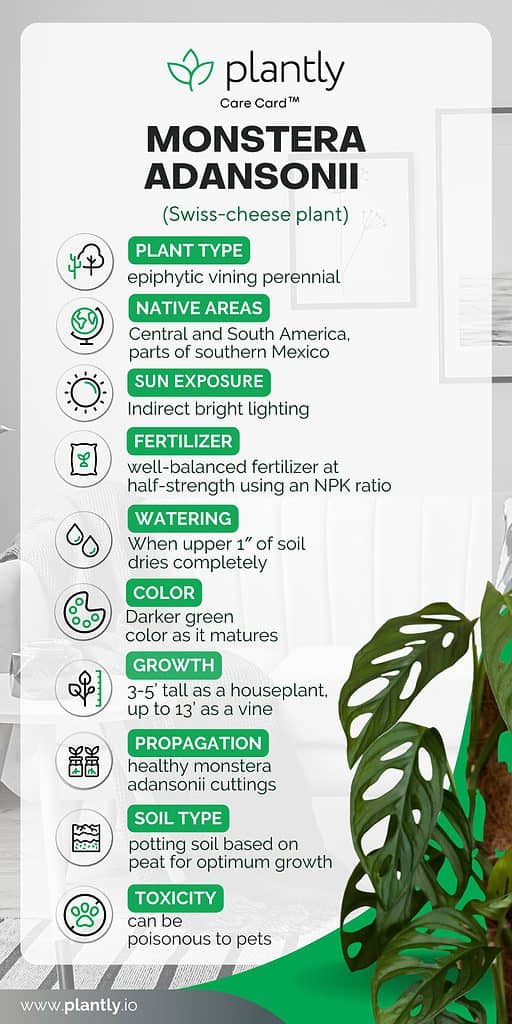
Credit: plantly.io
Ideal Growing Conditions
The Monstera Adansonii, also known as the Swiss Cheese Plant, is a popular houseplant. It is loved for its unique, hole-filled leaves. Proper care is essential for this plant to thrive. Understanding its ideal growing conditions is the first step. Let’s explore the key aspects of taking care of your Monstera Adansonii.
Light Requirements
Monstera Adansonii needs the right amount of light to grow well. It prefers bright, indirect light. Direct sunlight can harm its leaves, causing them to burn.
Here are some tips for providing the best light:
- Place the plant near a window with filtered light.
- Avoid placing it in direct sunlight.
- Use sheer curtains to diffuse the light if needed.
Artificial light can also be used if natural light is limited. Choose a full-spectrum grow light to mimic natural sunlight. Position the light about 12 inches above the plant. Turn it on for 10-12 hours a day.
Avoid low light conditions. They can cause the plant to grow slowly and become leggy. Regularly rotate the plant to ensure even light exposure.
Temperature Preferences
The Monstera Adansonii thrives in warm temperatures. Aim for a range of 65-85°F (18-29°C). Avoid sudden temperature changes. These can stress the plant.
Here are some key points to consider:
- Keep the plant away from cold drafts and air conditioners.
- Avoid placing it near heaters or radiators.
- Maintain a stable temperature in the room.
If the temperature drops below 60°F (15°C), growth may slow. The plant might also suffer from cold damage. During winter, move the plant to a warmer spot if needed.
In summary, providing a warm and stable environment is crucial. It ensures healthy growth and vibrant leaves.
Humidity Levels
Monstera Adansonii loves high humidity. Aim for a humidity level of 60-80%. Dry air can cause the leaves to brown at the edges.
Here are some ways to increase humidity:
- Use a humidifier near the plant.
- Place the plant on a humidity tray.
- Mist the leaves regularly with water.
Grouping plants together can also help. They create a micro-environment with higher humidity. Avoid placing the plant near vents or fans. They can dry out the air around it.
Monitoring humidity levels is important. Use a hygrometer to keep track. Adjust the methods as needed to maintain the ideal humidity.
By ensuring proper humidity, your Monstera Adansonii will flourish. Its leaves will stay healthy and beautiful.
Soil Selection
The Monstera Adansonii, also known as the Swiss Cheese Plant, is a popular houseplant. Its unique, holey leaves make it a favorite among plant enthusiasts. Proper care ensures it thrives indoors. One crucial aspect is soil selection. Choosing the right soil helps the plant grow strong and healthy.
Best Soil Mix
Monstera Adansonii prefers a well-draining soil mix. This type of soil allows water to flow through easily, preventing root rot. A good soil mix combines various components to meet the plant’s needs.
Here are the main ingredients for a suitable soil mix:
- Peat moss: Retains moisture without becoming waterlogged.
- Perlite: Improves aeration and drainage.
- Pine bark: Provides structure and increases drainage.
- Compost: Adds nutrients to the soil.
To create the best mix, combine these ingredients in the following proportions:
| Ingredient | Proportion |
|---|---|
| Peat moss | 40% |
| Perlite | 30% |
| Pine bark | 20% |
| Compost | 10% |
This mix provides the right balance of moisture retention and drainage. It ensures the Monstera Adansonii roots stay healthy and strong.
Drainage Importance
Good drainage is essential for Monstera Adansonii. Without it, the roots can become waterlogged. This leads to root rot, which can kill the plant. Ensuring proper drainage helps prevent this issue.
Here are some tips to improve drainage:
- Use pots with drainage holes: Allows excess water to escape.
- Place a layer of gravel: Helps with water flow at the pot’s bottom.
- Avoid overwatering: Let the top inch of soil dry out before watering again.
- Use a well-draining soil mix: As discussed earlier, it’s crucial.
By following these tips, you can maintain the right moisture level. This keeps the Monstera Adansonii healthy and vibrant. Proper drainage ensures the plant’s roots get enough air. This promotes better growth and overall well-being.
Watering Techniques
Monstera Adansonii, also known as the Swiss Cheese Plant, is a popular houseplant. Its unique leaves make it a favorite among plant lovers. Proper watering is crucial for its growth. This guide will help you understand the best watering techniques for Monstera Adansonii.
Frequency And Amount
Monstera Adansonii needs water, but not too much. Watering should be consistent but not excessive. The plant’s soil should be kept moist but never soggy.
How often should you water?
- Water once a week during growing seasons (spring and summer).
- In winter, water every two weeks.
How much water is needed?
- Check the top inch of soil. If dry, it’s time to water.
- Use enough water to moisten the soil, but avoid waterlogging.
Using the right amount of water is key. Too much or too little can harm the plant. Always ensure your pot has drainage holes to prevent water buildup.
Signs Of Overwatering
Overwatering can be detrimental. It can cause root rot and other issues. Look for these signs:
- Yellowing leaves: Excess water can turn leaves yellow.
- Soggy soil: Soil that stays wet is a red flag.
- Moldy soil: Mold or a musty smell indicates too much water.
If you notice these signs, reduce watering immediately. Let the soil dry out before the next watering. Overwatering can suffocate roots, leading to plant death.
Signs Of Underwatering
Underwatering can also stress your Monstera Adansonii. Watch for these indicators:
- Wilting leaves: Leaves may droop or wilt.
- Dry soil: Soil that pulls away from the pot’s edges is too dry.
- Browning tips: Leaf tips can turn brown and crispy.
To address underwatering, increase the watering frequency. Check the soil more often. Make sure to water thoroughly, allowing the soil to absorb moisture fully.
Fertilizing Tips
Monstera Adansonii, also known as the Swiss Cheese Plant, is a popular houseplant. It is loved for its unique, holey leaves. Proper care is essential for this plant to thrive. One key aspect of care is fertilizing. This guide will provide helpful tips on how to fertilize your Monstera Adansonii effectively.
Types Of Fertilizers
Choosing the right fertilizer is crucial for the health of your Monstera Adansonii. There are several types of fertilizers to consider:
- Organic Fertilizers: These are made from natural materials like compost or manure. They are slow-releasing and improve soil health over time.
- Liquid Fertilizers: These are easy to apply and quickly absorbed by the plant. They are ideal for indoor plants.
- Granular Fertilizers: These are sprinkled on the soil surface. They release nutrients slowly as they dissolve.
- Slow-Release Fertilizers: These come in pellets or spikes. They release nutrients over several months, reducing the need for frequent feeding.
Each type of fertilizer has its benefits. For Monstera Adansonii, a balanced liquid fertilizer is often recommended. It ensures the plant gets a steady supply of nutrients. Organic fertilizers can also be beneficial, especially for long-term soil health.
Feeding Schedule
Establishing a regular feeding schedule is important for your Monstera Adansonii. Here is a simple guide:
- Spring and Summer: These are the growing seasons. Fertilize every 2-4 weeks with a balanced liquid fertilizer.
- Fall: Growth slows down. Reduce feeding to once a month.
- Winter: The plant is mostly dormant. Fertilize once every 6-8 weeks or stop feeding altogether.
Always follow the instructions on your fertilizer package. Over-fertilizing can harm your plant. It’s better to under-fertilize than over-fertilize. Signs of over-fertilizing include yellowing leaves and burnt roots.
Water your plant before applying fertilizer. This helps prevent root burn. Also, consider flushing the soil with water every few months. This removes any salt build-up from fertilizers.
Propagation Methods
Monstera Adansonii is a beautiful plant with unique leaves. Caring for it is easy if you know what to do. One important part of care is propagation. Propagation means making new plants from an existing one. This guide will help you learn how to propagate Monstera Adansonii. There are two main methods: stem cuttings and air layering. Let’s explore each method in detail.
Stem Cuttings
Using stem cuttings is a popular way to propagate Monstera Adansonii. It’s simple and effective. Follow these steps to use stem cuttings:
- Find a healthy stem with at least one node.
- Cut the stem below the node using clean scissors.
- Remove the lower leaves from the cutting.
- Place the cutting in water or moist soil.
- Ensure the node is submerged in water or covered with soil.
- Keep the cutting in a warm, bright spot.
Roots will start to grow in a few weeks. Change the water every few days if using the water method. Once the roots are 2-3 inches long, you can plant the cutting in soil. Keep the soil moist and provide indirect sunlight. Your new Monstera Adansonii will thrive with proper care.
Air Layering
Air layering is another method to propagate Monstera Adansonii. It involves encouraging roots to grow while still attached to the parent plant. Follow these steps for air layering:
- Select a healthy stem with a node.
- Make a small cut on the stem below the node.
- Wrap the cut area with moist sphagnum moss.
- Cover the moss with plastic wrap to keep it moist.
- Secure the plastic wrap with ties or tape.
- Keep the moss moist by spraying it with water regularly.
After a few weeks, roots will start to grow in the moss. Once the roots are well-developed, cut the stem below the new roots. Plant the new rooted cutting in soil. Water it well and place it in a bright, warm spot. This method might take longer than stem cuttings, but it is very effective.
Common Pests
Monstera Adansonii, also known as the Swiss Cheese Plant, is loved for its unique and beautiful leaves. But like any houseplant, it is prone to pests. Learning about common pests and how to deal with them is essential. This guide will help you identify, prevent, and treat pests on your Monstera Adansonii.
Identifying Pests
Recognizing pests early can save your plant. Common pests that attack Monstera Adansonii include spider mites, mealybugs, and aphids. Each has unique characteristics.
Spider mites are tiny, often red or white. They create fine webs on the plant. Leaves may become speckled and yellow.
Mealybugs look like small cotton balls. They cluster around leaf nodes. They cause yellowing and wilting of leaves.
Aphids are small, green or black insects. They gather under leaves. They produce a sticky substance and cause leaves to curl.
Check your plant regularly. Use a magnifying glass for better inspection. Early detection is key to maintaining a healthy plant.
Prevention Strategies
Preventing pests is easier than treating them. Keep your Monstera Adansonii healthy to reduce pest problems.
- Inspect new plants before adding them to your collection. Quarantine them for a week.
- Clean leaves regularly with a damp cloth. This removes dust and potential pests.
- Maintain proper humidity. Pests thrive in dry conditions. Humidifiers or misting can help.
- Use well-draining soil. Avoid overwatering to prevent a damp environment for pests.
These simple steps can keep your Monstera Adansonii pest-free. Consistency is important for effective prevention.
Treatment Options
If pests appear, act quickly. Different pests require different treatments.
For spider mites, use a mixture of water and neem oil. Spray the plant thoroughly. Repeat every few days until the mites are gone.
For mealybugs, dab them with a cotton swab dipped in rubbing alcohol. This dissolves their protective coating.
For aphids, use insecticidal soap. Spray the affected areas. Repeat weekly until they disappear.
In severe cases, consider using a systemic insecticide. Follow the instructions carefully. Always try natural methods first. Chemical treatments should be a last resort.

Credit: hometoheather.com
Pruning And Maintenance
Monstera Adansonii is a popular houseplant known for its unique leaves. These leaves have holes, which give the plant a unique look. To keep it healthy and beautiful, proper pruning and maintenance are crucial. Knowing when and how to prune can make all the difference in your plant’s health and appearance.
When To Prune
Pruning Monstera Adansonii at the right time helps it grow better. The best time to prune is during the growing season. This is usually in spring and summer. During this period, the plant is more active and can recover faster.
Here are some signs that indicate it’s time to prune:
- Overgrown branches: If the plant looks too big, it needs pruning.
- Damaged leaves: Remove any leaves that are yellow or brown.
- Sparse growth: If some areas look empty, pruning can help new growth.
Pruning in the growing season also helps control the plant’s size. It encourages new, healthy growth. Avoid pruning in winter or late fall. The plant is dormant during these times and may not recover well.
Techniques For Pruning
Pruning Monstera Adansonii requires some simple tools and methods. Use clean, sharp scissors or pruning shears. Dirty tools can spread disease. Before you start, make sure to sterilize the blades with alcohol.
Here are some basic steps for effective pruning:
- Identify the parts: Look for overgrown, damaged, or yellow leaves.
- Make clean cuts: Cut just above a leaf node. This encourages new growth.
- Remove old stems: Cut off stems that look old or weak.
- Check for pests: While pruning, look for signs of pests. Remove affected parts.
After pruning, water the plant well. This helps it recover faster. Monitor the plant for a few days to ensure it is adjusting well. Pruning not only helps with the plant’s health but also keeps it looking neat and attractive. Regular maintenance and proper care will ensure your Monstera Adansonii thrives.
Potting And Repotting
Monstera Adansonii is a popular houseplant known for its unique leaves. These leaves have holes, making the plant look special. Proper care is key to keep it healthy. One important aspect is potting and repotting. This guide will help you understand when and how to repot your Monstera Adansonii.
When To Repot
Repotting Monstera Adansonii is essential for its growth. Repotting should be done every 1-2 years. Signs that it’s time to repot include roots growing out of the drainage holes or the plant becoming top-heavy.
- Roots are visible through the drainage holes.
- Water drains too quickly through the pot.
- The plant looks too large for its pot.
The best time to repot is in spring. The plant is actively growing then. Use fresh soil to give it new nutrients. Be gentle when handling the roots. Damaged roots can cause stress to the plant.
Steps to Repot:
- Gently remove the plant from its current pot.
- Shake off old soil from the roots.
- Place the plant in a new pot with fresh soil.
- Water the plant thoroughly.
Repotting helps the plant grow better and prevents root-bound issues. It’s a simple process that makes a big difference.
Choosing The Right Pot
Choosing the right pot is crucial for Monstera Adansonii. The pot should have drainage holes. This prevents water from sitting at the bottom, which can cause root rot.
Consider the following when choosing a pot:
| Pot Size | Description |
|---|---|
| Small Pot | Good for young plants. Allows roots to grow quickly. |
| Medium Pot | Suitable for plants that have outgrown small pots. |
| Large Pot | For mature plants. Provides space for root expansion. |
Material of the pot also matters. Terracotta pots are good as they allow air to reach the roots. Plastic pots retain moisture better, which is ideal for drier climates.
Important Tips:
- Make sure the pot is stable and won’t tip over.
- Ensure the pot is only 2-3 inches larger than the current one.
Choosing the right pot helps ensure the plant’s roots have enough space to grow. It also aids in proper water drainage. This keeps your Monstera Adansonii healthy and thriving.
Troubleshooting Issues
Monstera Adansonii, also known as the Swiss Cheese Plant, is a popular houseplant. It is loved for its unique and beautiful leaves. But taking care of this plant can sometimes be tricky. This guide will help you troubleshoot common issues. We will focus on leaf problems and growth issues.
Leaf Problems
Monstera Adansonii leaves can have several issues. Yellow leaves often mean overwatering. Check the soil. If it’s too wet, let it dry out before watering again. Brown tips can indicate underwatering or low humidity. Increase watering slightly and mist the leaves.
Black spots can be a sign of fungal infection. Remove affected leaves and ensure good air circulation. Holes in leaves are normal, but if they look unhealthy, it might be pests.
| Leaf Issue | Possible Cause | Solution |
|---|---|---|
| Yellow Leaves | Overwatering | Let soil dry out |
| Brown Tips | Underwatering or Low Humidity | Increase water and humidity |
| Black Spots | Fungal Infection | Remove leaves, improve air flow |
| Unhealthy Holes | Pests | Inspect and treat pests |
Growth Issues
Slow growth can be a common problem with Monstera Adansonii. Often, this is due to low light. Ensure the plant gets bright, indirect light. Leggy growth means the plant is stretching for light. Move it closer to a light source.
No new leaves can be frustrating. Check if the plant is root-bound. If so, repot it into a larger container. Drooping leaves usually mean the plant needs water. Check the soil moisture and water if dry.
Pale leaves can indicate nutrient deficiencies. Use a balanced fertilizer once a month during the growing season. Stunted growth can also be due to low temperatures. Keep the plant in a warm spot.
| Growth Issue | Possible Cause | Solution |
|---|---|---|
| Slow Growth | Low Light | Provide bright, indirect light |
| Leggy Growth | Insufficient Light | Move closer to light |
| No New Leaves | Root-bound | Repot into larger container |
| Drooping Leaves | Needs Water | Check soil and water |
| Pale Leaves | Nutrient Deficiency | Use balanced fertilizer |
| Stunted Growth | Low Temperature | Keep in a warm spot |
Conclusion
Caring for a Monstera Adansonii is simple and rewarding. Just remember the basics. Water when the top inch of soil is dry. Provide bright, indirect light. Maintain humidity levels. Fertilize monthly during the growing season. Prune to keep it healthy and shape it.
Watch for pests and treat promptly. Your Monstera Adansonii will thrive with proper care. Enjoy the lush, unique foliage and the beauty it adds to your space. Happy growing!