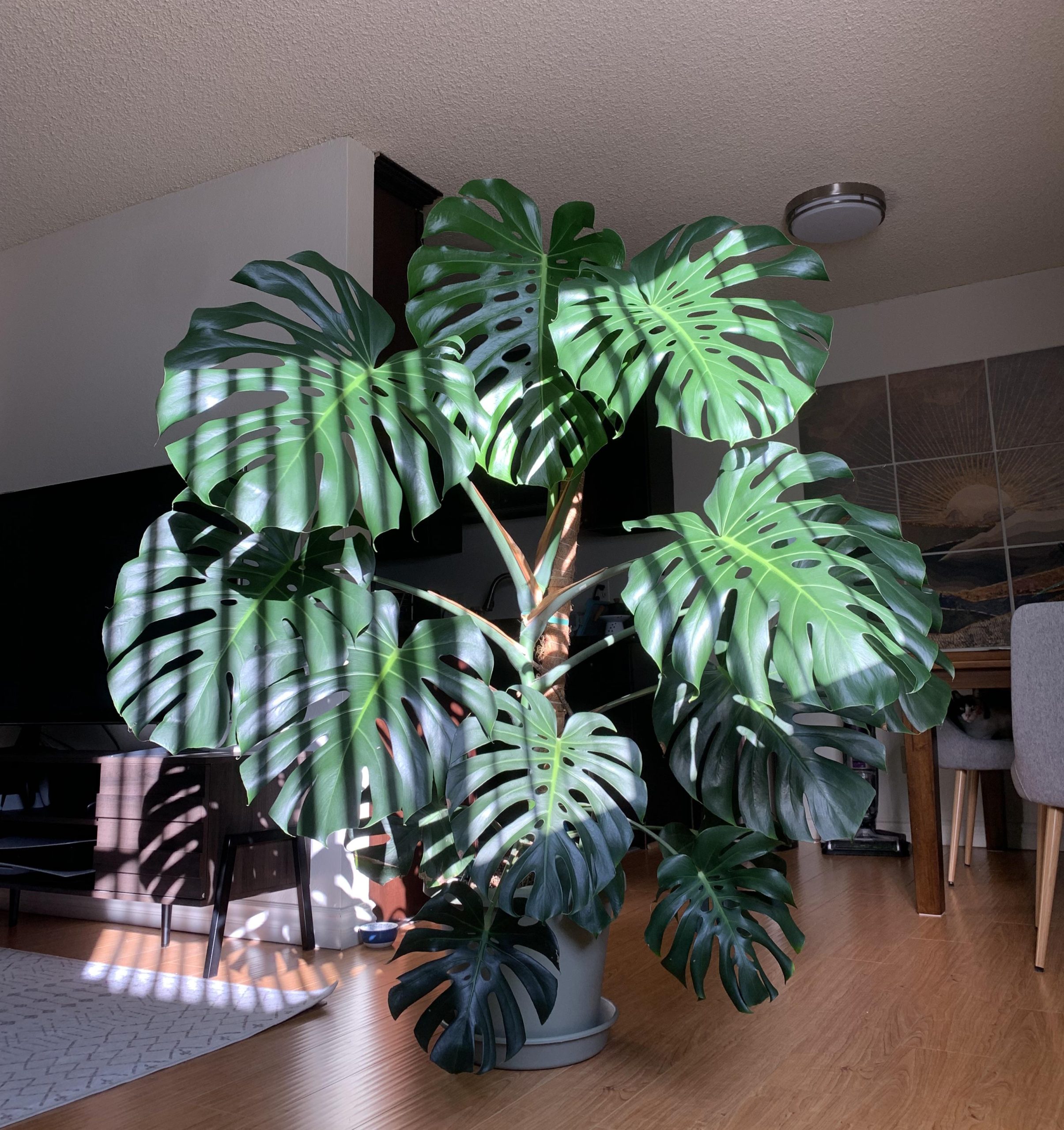
Monstera, also known as the Swiss Cheese Plant, is a popular houseplant. But can Monstera take full sun?
The short answer is no. Monstera plants thrive in bright, indirect light. Direct sunlight can harm them, causing leaf burn and stress. Monstera plants are native to tropical rainforests. They are used to growing under the canopy of taller trees.
This means they get filtered sunlight, not direct exposure. If you want your Monstera to flourish, placing it in a spot with indirect sunlight is key. Too much direct sun can damage its leaves. Instead, aim to mimic its natural habitat for the best results. Proper light is crucial for a healthy Monstera. Let’s delve deeper into how you can provide the right conditions for your plant.

Introduction To Monstera
The Monstera plant, known for its stunning foliage, is a favorite among plant enthusiasts. Its large, glossy leaves with unique perforations make it an eye-catching addition to any space. But can Monstera take full sun? Let’s explore this tropical plant’s background and varieties to understand its light requirements better.
Origins And Characteristics
Monstera plants originate from the tropical rainforests of Central and South America. They thrive under the forest canopy, where they receive dappled sunlight. These plants are well-adapted to humid, warm environments. Their aerial roots help them climb trees and absorb moisture from the air. This climbing nature allows them to grow tall, reaching impressive heights in their natural habitat.
Monstera leaves are large, heart-shaped, and develop distinctive holes as they mature. These holes, or fenestrations, are thought to help the plant withstand strong winds and heavy rain in its native environment. The Monstera’s unique appearance and easy care make it a popular choice for indoor gardening.
Popular Varieties
Several Monstera varieties are popular among plant lovers. Each has its own unique charm and characteristics:
- Monstera Deliciosa: The most common variety, known for its large, split leaves and rapid growth.
- Monstera Adansonii: Also known as the Swiss Cheese Plant, it has smaller, more numerous holes in its leaves.
- Monstera Obliqua: A rare variety with extremely delicate, lace-like leaves.
- Monstera Borsigiana: A smaller, more compact variety of the Deliciosa, ideal for limited space.
Choosing the right Monstera variety can depend on your space and aesthetic preferences. Each variety has unique light and care requirements. Understanding these can help your Monstera thrive, whether indoors or outdoors.

Natural Habitat
Monstera, also known as the Swiss Cheese Plant, thrives in its natural habitat. These tropical plants originate from the rainforests of Central and South America. Understanding their natural habitat helps in providing the best care.
Tropical Climate
In the wild, Monsteras grow under the canopy of large trees. They are accustomed to high humidity and warm temperatures. Rainforests provide consistent moisture and warmth, which Monsteras love.
The temperature in these regions usually ranges from 70°F to 85°F. This stable climate creates an ideal environment for Monsteras to flourish.
Light Conditions
Monsteras are adapted to indirect light in the wild. The dense tree canopy filters sunlight, providing dappled light. This means they rarely experience direct sunlight.
Exposure to full sun can damage their leaves. Brown spots or scorched edges indicate too much direct light. Therefore, it is best to mimic these light conditions at home.
A bright room with filtered light is perfect. Avoid placing them in direct sunlight for long periods.
| Light Condition | Impact on Monstera |
|---|---|
| Indirect Light | Healthy growth |
| Full Sun | Leaf damage |
| Low Light | Slowed growth |
In summary, Monsteras thrive in environments that replicate their natural habitat. They prefer indirect sunlight and a warm, humid climate. Caring for them with this knowledge ensures they stay healthy and vibrant.
Ideal Growing Conditions
Monstera plants, also known as Swiss Cheese Plants, thrive best in specific conditions. Understanding these conditions ensures healthy growth and vibrant foliage. Let’s dive into the ideal growing conditions for Monstera plants.
Indoor Vs Outdoor
Monstera plants grow well both indoors and outdoors. Indoors, they need bright, indirect light. Direct sunlight can scorch their leaves. Outdoors, they prefer a shaded spot. Avoid placing them in full sun for prolonged periods. This can damage their leaves and stunt growth.
Soil And Water Requirements
Monstera plants need well-draining soil. A mix of potting soil, peat moss, and perlite works best. This combination helps retain moisture without waterlogging. Water the plant when the top inch of soil feels dry. Overwatering can lead to root rot.
Ensure the pot has drainage holes. This prevents water from sitting at the bottom. Consistent moisture is key, but avoid letting the soil stay soggy.
Light Needs Of Monstera
Monstera plants, known for their iconic split leaves, thrive in specific lighting conditions. Understanding their light needs is crucial for healthy growth. These tropical plants originate from the rainforests of Central America. There, they grow under the canopy of taller trees. This natural habitat influences their light preferences.
Knowing the right light levels helps your Monstera flourish indoors. Let’s explore the ideal light conditions for these stunning plants.
Partial Shade Preference
Monstera plants prefer partial shade. Bright, indirect light suits them best. Place them near a window with filtered sunlight. East or west-facing windows work well. Direct sun can harm them. Too much light causes leaf burn and discoloration. A sheer curtain can help diffuse light. This mimics the natural forest canopy.
Effects Of Direct Sunlight
Direct sunlight can be harsh on Monstera leaves. Extended exposure leads to scorched leaves. Brown or yellow spots may appear. The plant might also show signs of stress. Leaves could droop or curl. Avoid placing your Monstera in direct sun. If necessary, move it to a shaded spot. Monitor the plant’s response to changes in light.
Impact Of Full Sun
Monstera plants, known for their large, decorative leaves, thrive in bright, indirect light. But can Monstera take full sun? Understanding the impact of full sun on Monstera is important for its health. Full sun can have both benefits and risks. Below, we explore these impacts in detail.
Potential Risks
Exposing Monstera to full sun can lead to several potential risks. The most common risk is leaf burn. Leaf burn occurs when the intense sunlight damages the plant’s tissues. This can result in brown or yellow spots on the leaves. Additionally, full sun can cause the soil to dry out quickly. This can lead to dehydration and stress for the plant.
Another risk is the loss of variegation. Some Monstera varieties have unique leaf patterns. These patterns can fade when exposed to too much sunlight. The plant may also become leggy as it tries to escape the harsh light.
Signs Of Sunburn
It is crucial to identify the signs of sunburn in Monstera plants. Early detection can help you take corrective actions. Here are some common signs:
- Brown or yellow spots on the leaves
- Dry, crispy leaf edges
- Fading leaf color
- Wilting or drooping leaves
If you notice these signs, move your Monstera to a shadier spot. Ensure it receives bright, indirect light. This will help the plant recover and thrive.
Keeping an eye on your Monstera’s exposure to sunlight is key. Proper light conditions will ensure your plant remains healthy and vibrant.
| Risk | Description |
|---|---|
| Leaf Burn | Brown or yellow spots on leaves |
| Dehydration | Soil dries out quickly, causing stress |
| Loss of Variegation | Unique leaf patterns fade |
Protecting Monstera From Sun
Monstera plants thrive in bright, indirect light. Direct sunlight can harm them. If not protected, their leaves may scorch and turn brown. Ensuring your Monstera gets the right amount of light is crucial. Let’s explore ways to protect your Monstera from too much sun.
Shading Techniques
Shading your Monstera can prevent leaf damage. There are several effective methods:
- Sheer Curtains: Use sheer curtains to diffuse sunlight. This reduces the intensity of direct sun.
- Shade Cloth: A shade cloth can provide excellent protection. Choose a cloth with 50-70% light reduction.
- Outdoor Umbrellas: If your Monstera is outdoors, place it under an umbrella. This provides necessary shade during peak sunlight hours.
Adjusting Position
Changing the position of your Monstera can also help. Consider these options:
- Near Windows: Place your Monstera near a north or east-facing window. These windows provide bright, indirect light.
- Rotating: Rotate the plant regularly. This ensures all sides receive equal light, preventing overexposure.
- Indoor Placement: Place your Monstera in a room that gets filtered sunlight. Avoid placing it directly under skylights or near south-facing windows.
Protecting your Monstera from excessive sun ensures its health and longevity. Follow these tips to keep your plant vibrant and thriving.
Expert Tips For Sun Exposure
Monstera plants are popular for their unique, large leaves. They thrive in bright, indirect light. But can they take full sun? Here are expert tips to help you manage your Monstera’s sun exposure effectively.
Gradual Acclimation
Direct sunlight can be harsh for Monstera plants. Gradual acclimation is key. Start by placing your Monstera in a spot with filtered sunlight for short periods.
Increase exposure by one hour each week. This helps the plant adjust without stress. Over time, it will tolerate more direct light.
Always monitor the plant’s reaction. If you see signs of distress, reduce sun exposure.
Monitoring Plant Health
Monitoring plant health is crucial. Check the leaves regularly. Look for signs of sunburn, such as brown spots and dry edges.
If the leaves look healthy and vibrant, the plant is adjusting well. If not, it’s best to move it to a shadier spot.
Water your Monstera adequately. Full sun can dry the soil faster. Ensure the plant gets enough moisture to stay hydrated.
Use the table below for a quick reference on signs of sun stress and solutions:
| Sign | Description | Solution |
|---|---|---|
| Brown Spots | Sunburn on leaves | Reduce sun exposure |
| Dry Edges | Leaf edges turning brown | Increase watering |
| Wilting | Leaves drooping | Move to shade |
Keep an eye on your Monstera’s overall health. Happy plants show new growth and vibrant leaves. Following these expert tips will help your Monstera thrive even in brighter light.
Common Mistakes To Avoid
Keeping your Monstera plant healthy can sometimes be a challenge. There are common mistakes plant owners make. These errors can harm your Monstera. Understanding these mistakes will help you better care for your plant.
Overexposure
Placing your Monstera in direct sunlight can cause damage. The intense rays can scorch the leaves. This leads to brown, crispy edges. Remember, Monstera plants thrive in indirect sunlight. Too much sun will harm them.
Neglecting Water Needs
Watering your Monstera incorrectly is another common mistake. Monsteras need consistent moisture. Letting the soil dry out too much can stress the plant. On the other hand, overwatering can cause root rot. It’s crucial to find the right balance. Check the soil regularly. Water when the top inch feels dry.

Frequently Asked Questions
Can Monstera Handle Full Sun Exposure?
Monstera prefers indirect light. Direct sunlight can scorch its leaves. Place it in a spot with filtered light.
How Much Sunlight Does Monstera Need?
Monstera thrives in bright, indirect light. It needs about 6-8 hours of light daily for optimal growth.
Will Full Sun Damage Monstera Leaves?
Yes, full sun can damage Monstera leaves. Direct sunlight can cause leaf burn and discoloration.
Can I Put My Monstera Outside?
Monstera can be placed outside in shaded areas. Avoid direct sunlight to prevent leaf damage.
Conclusion
Placing your Monstera in full sun can harm its leaves. These plants thrive best in indirect light. Too much sun may cause yellowing or burnt leaves. Always consider your plant’s natural habitat. Indoors, ensure it gets bright but filtered light.
Observing your Monstera’s response to light is key. Adjust its position if needed. Healthy growth comes from balancing light and shade. So, give your Monstera the right environment. Your plant will thank you with beautiful, lush leaves.
Leave a Reply