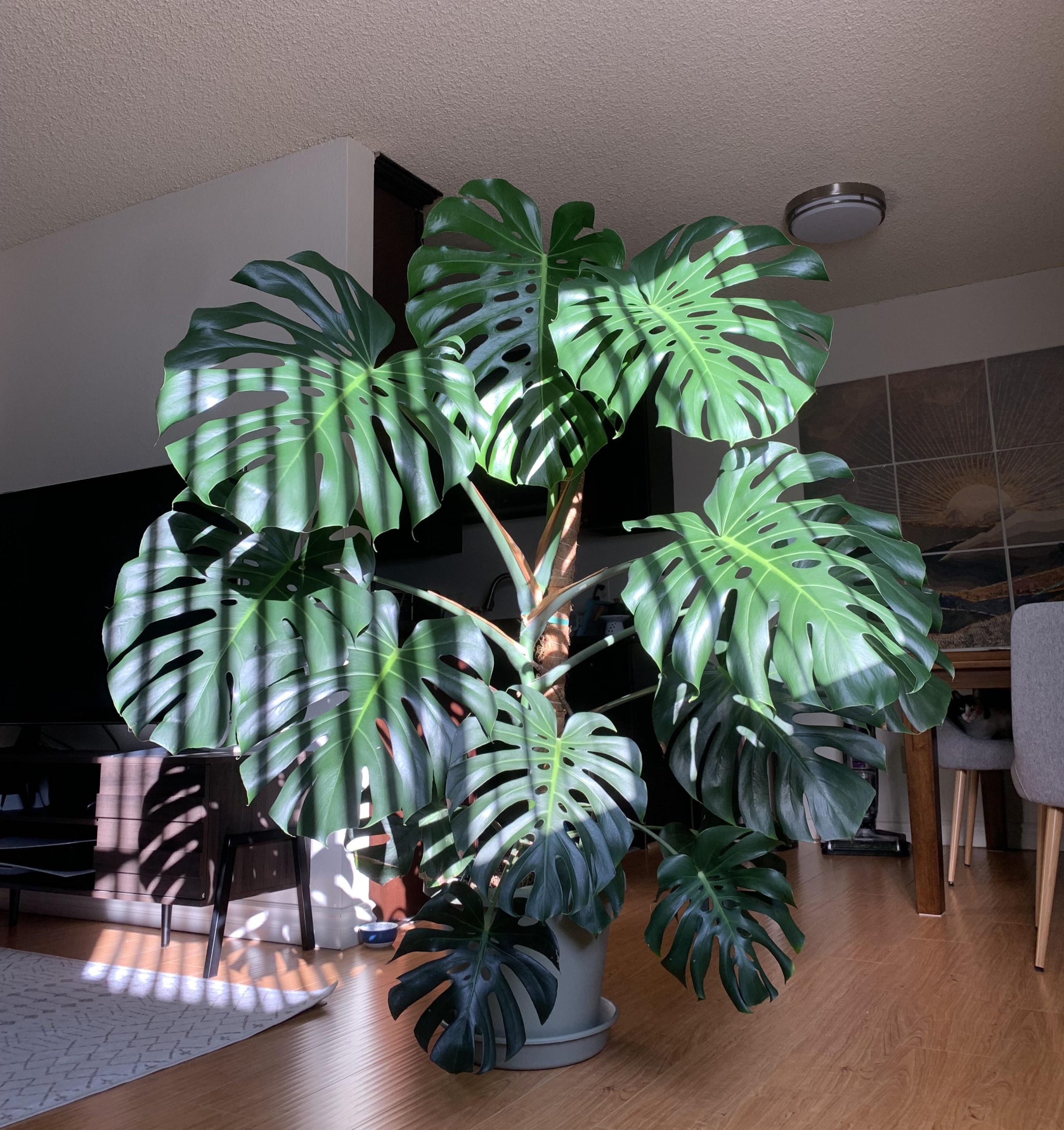
No, Monstera plants should not be in direct sunlight. They thrive in bright, indirect light.
Monstera plants are popular for their unique, large leaves and easy care. Yet, many plant lovers wonder about the best light conditions. Direct sunlight can harm your Monstera, causing leaf burn and stress. Instead, placing them in a spot with filtered light helps them grow strong and healthy.
Understanding the right lighting can make a big difference in your Monstera’s growth. This guide will explain why indirect light is best and how to find the perfect spot for your Monstera. Read on to learn more and keep your plant thriving.

Monstera And Sunlight
Monstera plants, known for their stunning leaves, are popular houseplants. Understanding their sunlight needs is crucial for their health. This section explores how sunlight affects Monstera plants and offers tips for optimal growth.
Sunlight Requirements
Monstera plants thrive in bright, indirect light. They need about 6-8 hours of light daily. While they can tolerate low light, growth may slow down. Too much direct sunlight can cause leaf burn. To ensure healthy growth, place your Monstera near a window with filtered light.
Direct Vs. Indirect Light
| Light Type | Effect on Monstera |
|---|---|
| Direct Sunlight | Can cause leaf burn and damage. Best to avoid. |
| Indirect Light | Ideal for Monstera. Promotes healthy growth. |
Direct sunlight can be harsh on Monstera leaves. Indirect light mimics their natural habitat. Use sheer curtains or place them a few feet away from windows. This ensures they get the right amount of light without harm.
Remember, observing your plant helps. If leaves turn yellow or brown, adjust the light. Healthy leaves indicate you’ve found the perfect spot.
Effects Of Direct Sunlight
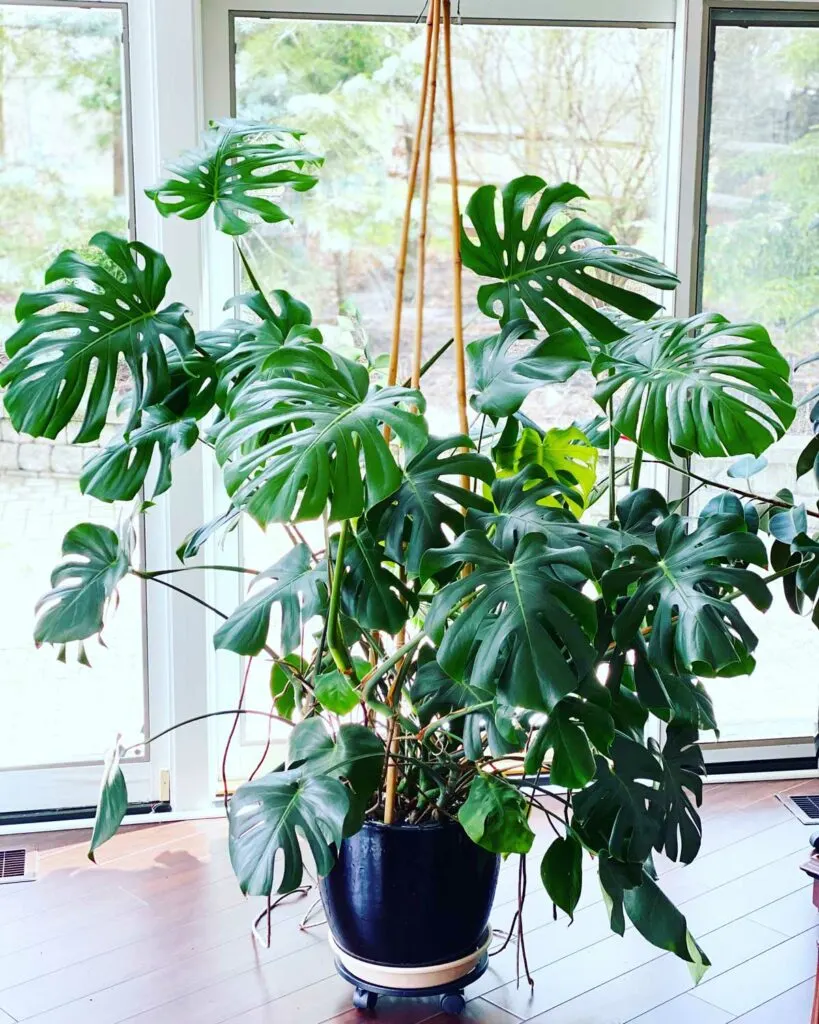
Monstera can suffer from direct sunlight, causing leaf burn and discoloration. Bright, indirect light is ideal for healthy growth.
Monstera plants are popular houseplants known for their large, split leaves. They thrive in bright, indirect light. Direct sunlight can be harmful to them. Understanding the effects of direct sunlight is crucial for keeping your Monstera healthy.Potential Damage
Direct sunlight can cause significant damage to Monstera plants. The intense rays can scorch the leaves. Prolonged exposure can lead to severe issues. Here are some potential problems:- Leaf burn
- Dehydration
- Stunted growth
Signs Of Sunburn
Recognizing sunburn on your Monstera is essential. Early detection helps prevent further damage. Look for these signs:- Brown or yellow patches on leaves
- Crispy edges
- Wilting
| Sign | Description |
|---|---|
| Brown or Yellow Patches | Indicates sunburn; leaves may feel dry |
| Crispy Edges | Edges of leaves become dry and brittle |
| Wilting | Plant appears limp due to dehydration |
Ideal Light Conditions
Understanding the ideal light conditions for your Monstera is crucial for its health. Monstera plants thrive in bright, indirect light. Direct sunlight can harm them, causing leaf burn and stress. Let’s explore the best locations and artificial lighting options to ensure your Monstera gets the perfect light.
Best Locations
Finding the right spot for your Monstera is essential. Here are some ideal locations:
- Near an east-facing window with filtered light.
- Beside a south or west-facing window with sheer curtains.
- In a bright room, several feet away from direct sunlight.
Avoid placing your Monstera in dark corners or under direct midday sun. These conditions can stress the plant.
Artificial Lighting Options
If natural light is insufficient, consider artificial lighting. Here are some effective artificial lighting options:
| Type | Description |
|---|---|
| LED Grow Lights | Energy-efficient and provide the right spectrum for growth. |
| Fluorescent Lights | Good for small spaces and promote healthy leaves. |
| Incandescent Lights | Less efficient and produce more heat. Use sparingly. |
Position the light source 12-24 inches from the plant. Ensure it receives 12-14 hours of light daily for optimal growth.
Care Tips For Monstera
Monstera plants are famous for their large, unique leaves. They add a tropical feel to any space. But to keep them healthy, they need proper care. Here are some essential tips to ensure your Monstera thrives.
Watering Needs
Monstera plants enjoy moist soil, but not soggy. Water them when the top inch of soil feels dry. Overwatering can lead to root rot. Use a pot with drainage holes. This helps excess water escape. Check the soil moisture regularly.
| Season | Watering Frequency |
|---|---|
| Spring and Summer | Once a week |
| Fall and Winter | Every two weeks |
Humidity Levels
Monstera plants thrive in high humidity. Aim for at least 60% humidity. Dry air can cause leaf edges to brown. To increase humidity:
- Use a humidifier
- Group plants together
- Place a tray with water and pebbles under the pot
Misting the leaves can also help. But avoid misting too often. Excess moisture on leaves can lead to fungus.
Protecting Monstera From Sunlight
Monsteras are popular houseplants known for their large, unique leaves. These plants thrive in bright, indirect sunlight. Direct sunlight can harm them. Prolonged exposure may cause their leaves to scorch and turn brown.
Proper protection from direct sunlight is crucial. There are simple ways to shield your Monstera. Let’s explore some effective methods.
Using Shades
Shades can help protect your Monstera from direct sunlight. Place your plant near a window with a sheer curtain. The curtain will filter the sunlight. This ensures the plant gets bright, indirect light. You can also use blinds. Adjust them to block harsh rays.
Another option is to use a shade cloth. This is especially useful for outdoor Monsteras. Shade cloths come in various densities. Choose one that blocks 50-75% of sunlight. This will keep your Monstera safe from the sun.
Relocating The Plant
Sometimes, relocating your Monstera is necessary. Move it to a spot with indirect light. North or east-facing windows are ideal. These locations offer gentle morning sunlight. Avoid placing the plant near south or west-facing windows. These spots get intense afternoon sun.
If moving the plant indoors, place it in a bright room. Ensure the light is diffused. You can use artificial grow lights as an alternative. Ensure they mimic natural light. This keeps your Monstera healthy and thriving.
Benefits Of Indirect Light
Monstera plants thrive in environments that mimic their natural habitat. This means providing the right amount of light. Indirect light offers numerous benefits that enhance the plant’s overall health and appearance.
Healthy Growth
Indirect light helps Monstera grow strong and healthy. It prevents the leaves from burning. Direct sunlight can cause brown spots. This is a sign of stress. Indirect light ensures the plant gets enough brightness without the risk of damage.
Optimal Leaf Development
Monstera leaves develop better in indirect light. They grow larger and have more splits. These splits are the plant’s natural way of adapting. Proper light conditions encourage this development. Indirect light also helps maintain the vibrant green color of the leaves. They stay lush and beautiful.
Seasonal Light Adjustments
When caring for a Monstera plant, adjusting its light exposure is crucial. Seasonal light changes impact its growth and health. Understanding how to care for your Monstera in different seasons ensures it thrives year-round.
Winter Care
In winter, sunlight is often limited. Your Monstera will need more light than usual. Place it near a south-facing window for maximum exposure. Avoid direct sunlight to prevent leaf burn.
Consider using a grow light if natural light is insufficient. Keep the temperature consistent. Monstera does not like cold drafts. Ensure the room remains between 65-75°F.
| Tip | Action |
|---|---|
| Light Placement | Near south-facing window |
| Additional Light | Use grow lights |
| Temperature | Maintain 65-75°F |
Summer Care
During summer, the sun is stronger. Monstera can get too much light. Place it in a bright room, but avoid direct sunlight. Direct sun can scorch its leaves.
Use sheer curtains to filter light. This prevents sunburn on the leaves. Monitor the soil moisture. Summer heat can dry it out quickly. Water your Monstera when the top inch of soil is dry.
- Light Filtering: Use sheer curtains.
- Watering: Check soil moisture regularly.
- Temperature: Keep room between 70-85°F.
Common Mistakes To Avoid
Monstera plants are popular for their beautiful, large leaves. But many plant enthusiasts make common mistakes with their light requirements. These mistakes can harm the plant’s health. This section highlights these mistakes and how to avoid them.
Overexposure To Sun
Monstera plants thrive in bright, indirect light. Direct sunlight can scorch their leaves. Overexposure to sun can cause brown, crispy edges. This can happen quickly. Monitor your plant’s placement. Avoid putting it near windows with direct sunlight.
Neglecting Light Needs
Monstera plants need enough light to grow well. Placing them in dark corners can stunt their growth. Yellowing leaves can be a sign of too little light. Move the plant to a brighter spot if this happens. Use a grow light if natural light is insufficient. Proper light balance is key for healthy growth.
Frequently Asked Questions
Can Monstera Tolerate Direct Sunlight?
Monstera plants prefer indirect sunlight. Direct sunlight can cause leaf burn. Place them in bright, indirect light for optimal growth.
How Much Light Does A Monstera Need?
Monstera plants thrive in bright, indirect light. They can tolerate low light but will grow slower. Avoid direct sunlight.
Can Monstera Grow Outdoors In Sunlight?
Monsteras can grow outdoors in filtered sunlight. Direct sunlight can damage their leaves. Provide shade or indirect light outdoors.
What Happens If Monstera Gets Too Much Sun?
Too much direct sunlight can scorch Monstera leaves. This causes brown spots or edges. Move the plant to indirect light.
Conclusion
Monstera plants need careful light management. Direct sunlight can harm their leaves. Place your plant in bright, indirect light. This helps it grow well and stay healthy. Move the plant occasionally to find its perfect spot. Watch for signs of too much light.
Yellow or burnt leaves mean it needs less sun. Keep your Monstera happy and thriving by understanding its light needs. Your plant will thank you with beautiful, lush leaves.
Leave a Reply