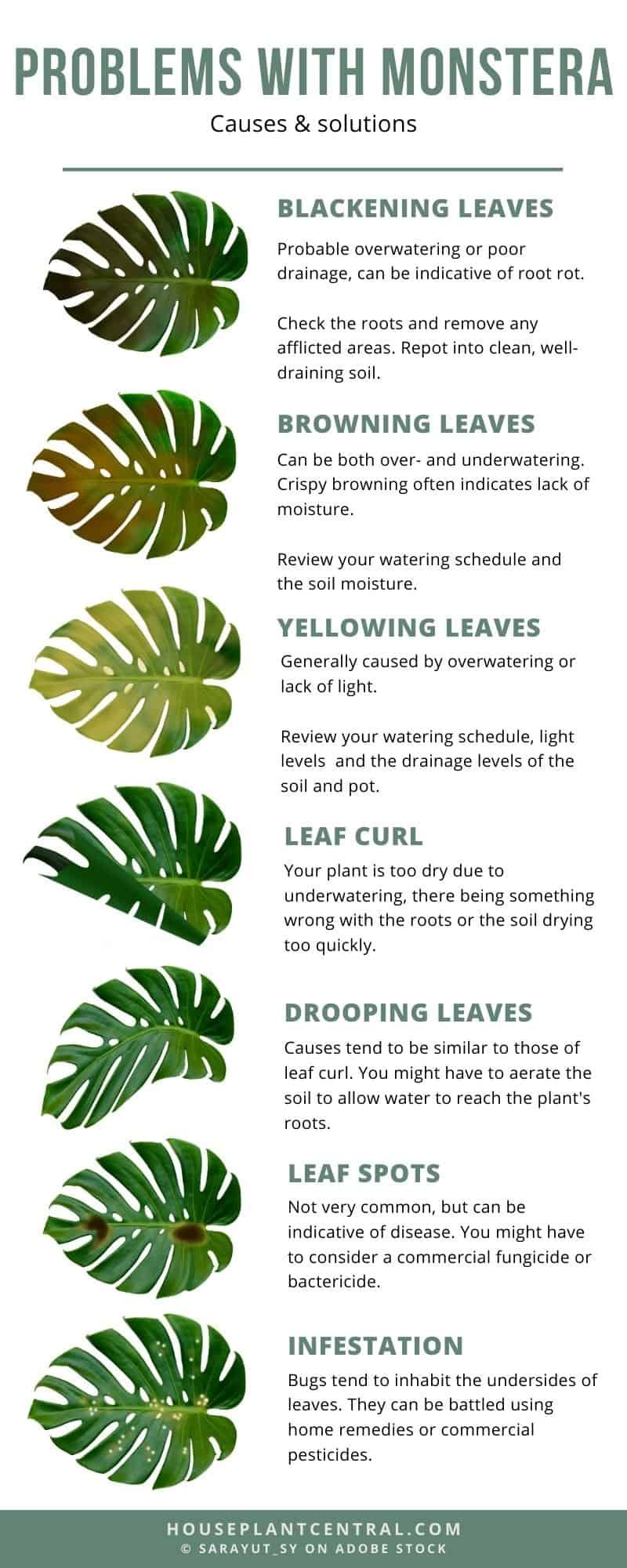
Monstera plants are popular for their beautiful, large leaves. Yet, they can face several common issues.
Caring for a Monstera plant can be a delight. But even the best plant parents encounter problems. Yellowing leaves, brown spots, and leggy growth are just some challenges. These issues can frustrate any plant lover. Understanding these common problems can help keep your Monstera thriving.
This guide will explore frequent issues and how to fix them. You’ll find tips to keep your plant healthy and beautiful. Ready to give your Monstera the best care? Let’s dive into the common issues and solutions.

Introduction To Monstera
Monstera plants, known for their unique leaves, often face common issues. These include yellowing leaves, root rot, and pest infestations. Proper care helps prevent these problems.
Monstera, also known as the Swiss Cheese Plant, is a favorite among plant lovers. Its large, glossy leaves with unique splits make it a stunning indoor plant. This tropical plant brings a touch of the jungle into your home. Native to Central America, Monstera thrives in warm, humid conditions. It’s easy to care for, making it perfect for both beginners and experienced gardeners. Understanding the basics of Monstera care can help you grow a healthy and vibrant plant.Plant Overview
Monstera plants belong to the Araceae family. They are well-known for their distinctive, perforated leaves. These holes help the plant withstand heavy rain and wind in its natural habitat. Monstera can grow quite large, sometimes reaching up to 10 feet indoors. These plants prefer indirect light and well-draining soil. Water them when the top inch of soil feels dry. Over-watering can lead to root rot, a common issue for Monstera. Keep the humidity level high to mimic their natural environment.Popular Varieties
Monstera Deliciosa is the most popular variety. It’s famous for its large, split leaves. Another favorite is Monstera Adansonii, also known as the Swiss Cheese Vine. This variety has smaller, more delicate leaves with oval holes. Monstera Borsigiana is a smaller form of Monstera Deliciosa. It grows faster and has similar care needs. Monstera Obliqua is rare and sought after for its unique, lace-like leaves. Each variety adds a different touch of beauty to your plant collection. “`Yellowing Leaves
Monstera plants are beloved for their unique, large leaves. They add a tropical touch to any space. But yellowing leaves can be a common issue. This can worry many plant owners. Understanding the reasons behind yellowing leaves helps keep your Monstera healthy.
Common Causes
Yellowing leaves on a Monstera can happen for several reasons. Overwatering is a major cause. Monstera roots need oxygen. Too much water can suffocate them. Underwatering is another cause. The plant doesn’t get enough moisture, leading to stress.
Light is also crucial. Too much direct sunlight can burn the leaves. Not enough light can make them yellow. Nutrient deficiencies can also affect leaf color. Lack of essential nutrients causes yellowing leaves. Pests like spider mites and aphids can also stress the plant.
Solutions And Preventive Measures
First, check your watering habits. Water your Monstera when the top inch of soil is dry. Ensure the pot has drainage holes. This prevents water from sitting at the bottom. Use well-draining soil to help with water flow.
Place your Monstera in bright, indirect light. Avoid direct sunlight. This can burn the leaves. If your home is dark, use a grow light. This provides the necessary light without burning the plant.
Feed your Monstera with a balanced fertilizer. Do this once a month during the growing season. This provides essential nutrients. Regularly check for pests. Treat any infestations promptly with insecticidal soap or neem oil.
With these solutions, your Monstera can thrive. Prevent yellowing leaves by giving the plant the right care. A healthy Monstera brings beauty to your home.
Brown Leaf Tips
Monstera plants are popular houseplants known for their stunning foliage. Yet, many plant owners face the issue of brown leaf tips. This problem can make your Monstera look less vibrant. Identifying the causes and applying proper care can help restore its health.
Identifying Causes
Several factors contribute to brown leaf tips in Monstera plants. One common cause is underwatering. When the plant lacks enough moisture, the leaf tips turn brown. Overwatering can also lead to similar issues due to root rot. Another cause is low humidity. Monsteras thrive in humid environments, and dry air can harm them. Additionally, poor soil quality or inadequate light can stress the plant, resulting in brown tips.
Care Tips
To prevent brown leaf tips, water your Monstera properly. Ensure the soil is moist but not soggy. Adjust your watering schedule based on the season. Maintain high humidity levels. You can use a humidifier or place a tray of water near the plant. Check the soil quality regularly. Use well-draining soil to avoid root rot. Place your Monstera in a spot with bright, indirect light. Avoid direct sunlight, as it can scorch the leaves.
Root Rot
Root rot is a common issue for Monstera plants. It can lead to severe damage and even death of your beloved plant. Understanding the early signs and knowing the treatment options can save your Monstera from this ailment.
Early Signs
Early signs of root rot in Monstera include yellowing leaves and a musty smell. The leaves may also become mushy or start to wilt. Check the soil; if it feels overly wet or soggy, root rot might be the cause.
Treatment Options
To treat root rot, first, remove the plant from its pot. Gently shake off excess soil to expose the roots. Trim away any brown, mushy, or foul-smelling roots. Use sterilized scissors to prevent spreading the disease.
Next, repot the Monstera in fresh, well-draining soil. Choose a pot with drainage holes. Water the plant sparingly, allowing the topsoil to dry out between waterings. Ensure the plant gets adequate indirect light to recover.
Pest Infestations
Pest infestations can cause many problems for your Monstera plant. These pests can damage leaves, stunt growth, and even cause the plant to die. It’s important to identify and address these issues quickly.
Common Pests
Several pests are common in Monsteras. Knowing what to look for can help you take action sooner.
| Pest | Signs |
|---|---|
| Aphids | Sticky residue, curled leaves |
| Spider Mites | Webbing on leaves, tiny specks |
| Mealybugs | White, cottony spots |
| Scale | Small, brown bumps |
Control Methods
Controlling pests on your Monstera involves several steps. Here are some effective methods:
- Manual Removal: For small infestations, remove pests by hand. Use a damp cloth or cotton swab.
- Neem Oil: Spray leaves with diluted neem oil. It deters many pests.
- Insecticidal Soap: Use insecticidal soap to wash leaves. Follow product instructions for best results.
- Introduce Beneficial Insects: Ladybugs and predatory mites eat harmful pests. Consider releasing them near your Monstera.
- Isolation: Isolate infested plants to prevent spreading. Keep new plants separate for a few weeks.
By staying vigilant and taking prompt action, you can protect your Monstera from pest infestations. Healthy plants are less likely to suffer from pests, so proper care is essential.
Leaf Curling
Monstera plants are loved for their large, glossy leaves. But sometimes, these leaves start curling. Leaf curling can signal that something is wrong. Understanding the reasons behind it and knowing how to fix it can help you keep your Monstera healthy.
Possible Reasons
- Underwatering: Dry soil can cause leaves to curl.
- Overwatering: Too much water can also lead to curling.
- Low Humidity: Monsteras need high humidity to thrive.
- Pest Infestation: Pests can stress the plant, causing leaf curling.
- Temperature Stress: Extreme temperatures can affect leaf health.
Corrective Actions
- Check Soil Moisture: Ensure the soil is neither too dry nor too wet. Water your Monstera when the top inch of the soil is dry.
- Increase Humidity: Use a humidifier or place a tray of water near the plant.
- Inspect for Pests: Look for signs of pests. Use insecticidal soap if needed.
- Adjust Temperature: Keep the plant in a room with stable temperatures. Avoid placing it near drafts or heating vents.
- Proper Lighting: Ensure the plant gets indirect sunlight. Too much direct light can cause leaf curling.
Slow Growth
Monstera plants are popular for their lush, tropical leaves. But sometimes, they may not grow as quickly as expected. Slow growth can be frustrating for plant owners. Understanding the reasons behind it can help you nurture a healthier Monstera.
Growth Factors
Several factors affect Monstera growth. Light is a critical element. Monstera plants need bright, indirect light. Too little light can stunt their growth. Temperature also plays a role. Monsteras thrive in warm environments. Cold conditions can slow their growth significantly.
Soil quality is another key factor. The right soil mix ensures proper drainage and nutrients. Poor soil can lead to slow growth. Watering habits are crucial too. Overwatering or underwatering can stress the plant. Both can hinder its growth.
Improvement Techniques
To boost Monstera growth, start by assessing its light conditions. Ensure your plant gets enough indirect sunlight. If natural light is insufficient, consider using grow lights.
Maintain a consistent temperature for your Monstera. Avoid placing it near drafts or heating vents. Keep the room temperature between 65-85°F.
Use well-draining soil. A mix of peat, perlite, and orchid bark works well. Repot your Monstera if the soil is compacted or lacks nutrients. Ensure the pot has drainage holes to prevent waterlogged roots.
Water your Monstera properly. Allow the top inch of soil to dry out between waterings. Check the moisture level regularly. Avoid letting the plant sit in water.
Fertilize your Monstera during the growing season. Use a balanced, water-soluble fertilizer every month. This provides essential nutrients for healthy growth.
Overwatering And Underwatering
Monstera plants are popular for their stunning, split leaves. Yet, they often suffer from common issues like overwatering and underwatering. Both can harm your plant if not managed correctly. Understanding these problems can help keep your Monstera healthy and thriving.
Signs To Watch
Overwatering your Monstera can lead to yellow leaves and root rot. The leaves might feel soft and mushy. You may also notice a foul smell from the soil. These are clear indicators your plant is getting too much water.
Underwatering, on the other hand, causes the leaves to turn brown and crispy. The plant may wilt or droop. The soil will feel dry and hard. These are signs your Monstera needs more water.
Watering Tips
Water your Monstera when the top inch of soil feels dry. Use your finger to check the soil moisture. If it feels dry, it’s time to water. If it’s still moist, wait a few days.
Ensure your pot has drainage holes. Excess water needs to escape. This prevents root rot. Use a well-draining soil mix. This helps keep the right moisture balance.
Water less in winter. Monsteras need less water during this season. Too much water can cause problems. Adjust your watering schedule accordingly.
Fungal And Bacterial Issues
Monstera plants are beloved for their unique, large leaves. Yet, they can face problems. Fungal and bacterial issues are common culprits. These issues can harm your Monstera’s health. Recognizing and addressing these problems early is key.
Symptoms
Fungal and bacterial infections show distinct signs. Yellow or brown spots may appear on leaves. These spots might have a yellow halo. Leaves can develop black, mushy areas. You may notice a foul smell. Wilting and stunted growth are also common.
Treatment And Prevention
Quick action can save your plant. Remove affected leaves immediately. Use sterilized tools to cut off infected parts. Ensure good air circulation around your plant. Avoid overhead watering. Water at the base instead. Use a fungicide or bactericide as needed.
Prevention is better than cure. Keep your Monstera in a well-ventilated area. Do not overwater. Let the soil dry between waterings. Inspect your plant regularly for early signs of trouble. Clean your tools before and after use.

General Plant Care Tips
Monstera plants are a popular choice for many plant enthusiasts. Their lush leaves and easy-going nature make them a favorite. Yet, even the hardiest plants need proper care to thrive. Below are some essential tips for maintaining your Monstera’s health and vitality.
Optimal Light Conditions
Monstera plants love bright, indirect light. Direct sunlight can scorch their leaves. Place your Monstera near a window with filtered light. If natural light is scarce, consider using a grow light. Consistent light exposure helps the plant grow evenly.
| Light Type | Effect on Monstera |
|---|---|
| Bright, Indirect Light | Optimal growth, vibrant leaves |
| Direct Sunlight | Scorched, yellowing leaves |
| Low Light | Slow growth, leggy appearance |
Soil And Fertilization
Monstera plants prefer well-draining soil. A mix of potting soil, peat moss, and perlite works well. This blend ensures proper drainage and air circulation. Overwatering can lead to root rot, so always check the soil before watering.
Fertilize your Monstera every month during the growing season. Use a balanced, water-soluble fertilizer. Dilute it to half strength to avoid nutrient burn. Regular fertilization promotes healthy growth and vibrant leaves.
- Soil Mix: Potting soil, peat moss, perlite
- Fertilizer: Balanced, water-soluble, half strength

Frequently Asked Questions
Why Are My Monstera Leaves Turning Yellow?
Yellow leaves can indicate overwatering, poor drainage, or lack of sunlight. Ensure the soil drains well and water only when the top inch is dry. Also, place your Monstera in bright, indirect light.
How Do I Treat Monstera Leaf Spots?
Leaf spots are often caused by fungal infections or pests. Remove affected leaves and treat with a fungicide or insecticidal soap. Improve air circulation and avoid water on the leaves to prevent future issues.
Why Are My Monstera Leaves Curling?
Curling leaves usually mean your Monstera is thirsty or stressed. Check soil moisture and water if it feels dry. Ensure the plant isn’t exposed to cold drafts or direct sunlight.
How Do I Prevent Root Rot In Monstera?
Prevent root rot by ensuring your Monstera has well-draining soil and a pot with drainage holes. Water only when the top inch of soil is dry. Avoid letting the plant sit in water.
Conclusion
Caring for a Monstera can be straightforward with the right knowledge. Pay attention to common issues like yellowing leaves and pests. Proper watering and light are essential. Regular checks help spot problems early. Addressing them promptly ensures a healthy plant.
Enjoy the beauty of your thriving Monstera.
Leave a Reply