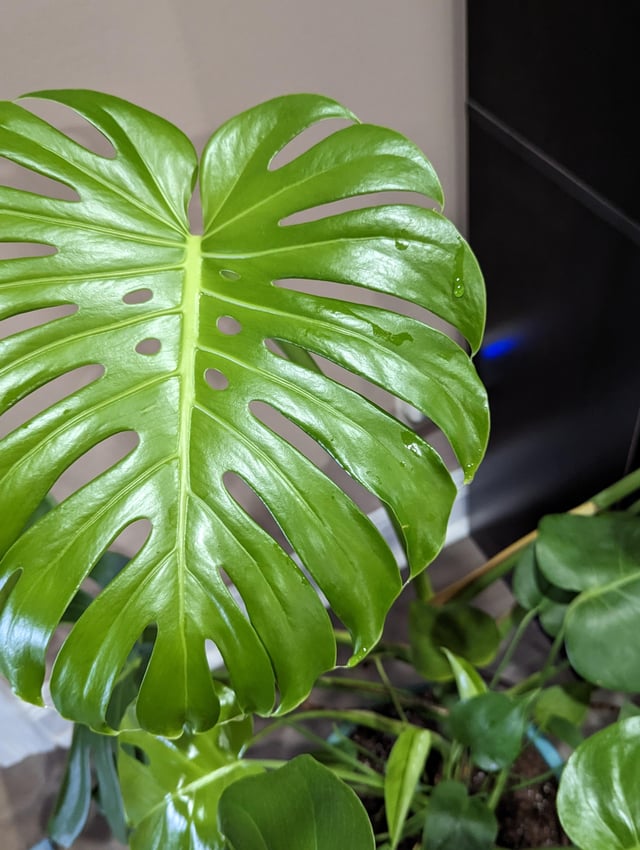
Monstera plants sometimes sweat. But why does this happen?
Monstera, a popular houseplant, often shows small droplets of water on its leaves. This phenomenon is called guttation. It’s a natural process where the plant releases excess moisture. Understanding why Monstera sweats can help you care for it better. This insight can also reveal how plants manage their internal water balance.
Knowing this will ensure your Monstera stays healthy and beautiful. Let’s explore the reasons behind this interesting behavior.
Introduction To Monstera Plants
Monstera plants, often called Swiss Cheese Plants, have become a favorite among houseplant enthusiasts. Known for their unique leaf patterns and easy care, they add a tropical touch to any space.
Popular Houseplant
Monstera plants are popular houseplants worldwide. They thrive indoors and adapt well to different environments. Their large, glossy leaves make them a striking choice for home decor.
Unique Characteristics
Monstera plants have unique characteristics that set them apart. Their leaves develop natural holes and splits, which many find fascinating. This feature gives them their nickname, Swiss Cheese Plant.
Another interesting aspect is their ability to “sweat.” This process, called guttation, occurs when the plant releases excess water from its leaves. It happens most often during the night or early morning.
Monstera plants also grow aerial roots. These roots help the plant climb and support itself. They can attach to trees, poles, or other structures, making them versatile in their growth patterns.
What Is Monstera Sweating?
Monstera sweating is a natural process called guttation. This occurs when the plant releases excess water through tiny openings on its leaves. While it might seem strange, it’s a common and healthy occurrence.
Visible Signs
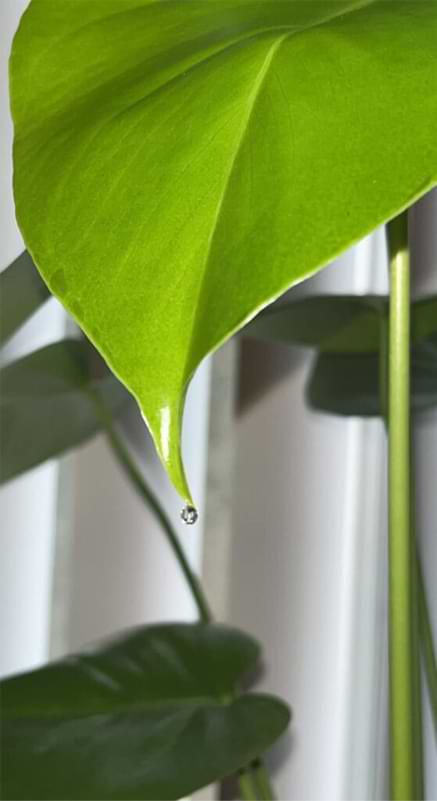
One way to tell if your Monstera is sweating is by the appearance of water droplets on the edges of its leaves. These droplets are usually seen in the early morning. You might also notice a slight dampness on the surface where the plant is placed.
Another sign is the presence of a sticky substance on the leaves. This can be confused with pests, but it’s often just a result of guttation. It’s a good idea to wipe the leaves to prevent dust accumulation.
Common Misconceptions
Many people think that Monstera sweating is a sign of overwatering. While too much water can contribute, it’s not the sole reason. Plants sweat to balance their internal water levels. It’s a natural and healthy process.
Another misconception is that sweating means the plant is sick. This is not true. A sweating Monstera is usually a sign that it is well-hydrated and healthy. Understanding this can help you take better care of your plant.
The Science Behind Guttation
Monstera plants often display an intriguing phenomenon: they sweat. This sweating is known as guttation. Understanding the science behind guttation helps us care for these plants better.
Definition Of Guttation
Guttation is the process where plants exude water droplets. This happens through special structures called hydathodes. These hydathodes are located at the edges of leaves.
Guttation occurs when there is excess moisture in the soil. The plant roots absorb more water than the plant needs. The excess water then travels to the leaf tips. There, it is released as droplets.
How It Differs From Dew
Dew forms due to condensation. It appears on plant leaves in the early morning. Dew forms when the air cools and moisture condenses on surfaces.
Guttation, on the other hand, comes from within the plant. It is a result of internal pressure. It usually happens at night. This is when the plant is not transpiring actively.
So, while both dew and guttation result in water droplets, their origins differ significantly. Dew is from the atmosphere. Guttation is from the plant itself.

Factors Causing Monstera Sweating
Monstera sweats due to high humidity and excess water in the soil. This process helps the plant release extra moisture. Environmental changes can also cause this sweating.
Monstera plants are known for their beautiful leaves and unique patterns. Sometimes, you might notice your Monstera “sweating.” This is a common occurrence. It’s important to understand what causes this phenomenon. Let’s explore the main factors that lead to Monstera sweating.Environmental Conditions
Environmental factors play a big role in Monstera sweating. High humidity levels can cause this plant to release excess moisture. This process, known as guttation, occurs mostly at night. The plant releases water droplets from the tips of its leaves. This is a natural response to high humidity and is not harmful. Temperature also affects Monstera sweating. Warm temperatures can increase the rate of transpiration. This is the process where the plant loses water through tiny openings called stomata. If the environment is too warm, the plant may release more moisture to cool down.Watering Practices
Watering habits significantly influence Monstera sweating. Overwatering is a common cause. When the soil is too wet, the roots absorb more water than the plant needs. The excess water is then expelled through the leaf tips. This is the plant’s way of balancing water levels. The time of day you water the plant also matters. Watering in the evening can lead to increased sweating at night. The plant is less likely to use up the water during this period. Morning watering allows the plant to utilize the water throughout the day. This can reduce the likelihood of sweating. By understanding these factors, you can better care for your Monstera. This helps maintain its health and beauty. “`Benefits Of Guttation For Monstera
Monstera plants are known for their unique appearance and intriguing habits. One such habit is guttation, where the plant releases water droplets from its leaves. This process might seem strange, but it offers several benefits to the Monstera. Understanding these benefits can help you care for your Monstera better.
Nutrient Release
Guttation helps Monstera release excess nutrients. The plant pushes out sap containing minerals and sugars. This excess sap forms droplets on the leaf edges. These droplets carry away surplus salts and minerals, keeping the plant healthy.
Hydration Balance
Guttation maintains the Monstera’s hydration balance. During the night, when transpiration slows down, guttation helps expel extra water. This process prevents root waterlogging and ensures the plant stays hydrated. It is a natural way for the Monstera to manage its water levels.
Addressing Excessive Sweating
Monstera plants are popular for their striking leaves and easy care. Yet, many plant owners notice their Monstera sweating. This phenomenon can be concerning. Addressing excessive sweating involves a few important steps. Understanding and adjusting your plant care routine can help reduce this issue.
Adjusting Watering Routine
Overwatering is a common reason for Monstera sweating. Ensure the soil is dry before watering again. Check the top inch of soil with your finger. If it feels dry, it is time to water. If it is still wet, wait a few more days. Always use well-draining soil. This helps prevent water from pooling at the roots.
Consider the size of your pot. A pot that is too large retains too much water. Choose a pot that fits the size of your plant. This ensures the plant gets the right amount of water without excess.
Improving Air Circulation
Poor air circulation can lead to excessive sweating. Place your Monstera in a spot with good airflow. Avoid placing it in a crowded or closed space. Use a fan to increase air movement around the plant. This helps the leaves dry faster and reduces sweating.
Check the humidity levels in your home. High humidity can cause Monstera to sweat more. Use a dehumidifier if needed. Keeping the humidity in check helps your plant stay healthy.
Common Myths About Monstera Sweating
Monstera plants are popular for their unique leaves and easy care. But many plant owners notice their Monstera sweating. This can be confusing and lead to some common myths. Let’s explore and debunk these myths.
Sweating As A Sign Of Disease
Many people think Monstera sweating is a sign of disease. This is not true. Sweating, or guttation, is a natural process. It happens when the plant releases excess water. This is often due to high humidity or overwatering. The plant is not sick; it is just balancing its water levels.
Impact On Plant Health
Another myth is that sweating harms the plant’s health. In reality, sweating is harmless. It does not mean the plant is unhealthy. It is a normal response to environmental factors. Guttation helps the plant manage water pressure. So, there is no need to worry about the plant’s health.
| Myth | Truth |
|---|---|
| Sweating means the plant is sick | Sweating is a natural process |
| Sweating harms the plant | Sweating is harmless |
Understanding these myths can help you take better care of your Monstera. Remember, sweating is just a part of plant life. It is not a cause for concern.
Tips For Healthy Monstera Care
Monstera plants, with their unique leaves, are a popular choice for many. For them to thrive, you need to follow a few key care tips. This ensures your Monstera remains healthy and vibrant.
Optimal Watering Techniques
Watering your Monstera properly is essential. The soil should be moist, not soggy. Overwatering can cause root rot. It is best to water when the top inch of soil feels dry. This method prevents waterlogging and keeps the roots healthy.
Consider the pot’s drainage. Ensure it has holes to allow excess water to escape. This will help in maintaining the right moisture level in the soil. Using room temperature water is ideal. Cold water can shock the roots, causing stress to the plant.
Ideal Growing Conditions
Monstera plants thrive in bright, indirect light. Direct sunlight can scorch their leaves. Place them near a window with filtered light. This ensures they get enough light without damage.
Humidity levels play a significant role. Monstera loves high humidity. You can mist the leaves or use a humidifier. This keeps the plant happy and healthy. Keep the temperature between 65°F to 85°F. Avoid placing it near drafts or sudden temperature changes.
Using the right soil mix also matters. A mix of peat, perlite, and pine bark works well. It provides good drainage and aeration, promoting healthy growth.

Frequently Asked Questions
Why Does My Monstera Plant Sweat?
Monstera plants sweat due to a process called guttation. It occurs when the plant excretes excess water through its leaves.
Is Sweating Normal For Monstera Plants?
Yes, sweating is normal for Monstera plants. It’s a natural process and indicates the plant is healthy.
How Can I Stop Monstera From Sweating?
You can’t completely stop sweating, but reducing watering can help. Ensure proper drainage to avoid waterlogged soil.
Does Monstera Sweating Mean It’s Overwatered?
Not necessarily. Sweating can happen even if the Monstera isn’t overwatered. Check the soil moisture to be sure.
Conclusion
Monstera plants sweat due to natural processes. Guttation helps release excess water. This ensures the plant stays healthy. Proper care prevents excessive sweating. Provide the right amount of water and light. Monitor your Monstera for signs of stress. Happy plants thrive and grow beautifully.
Enjoy the lush, green leaves of your Monstera.
Leave a Reply