Monstera plants are popular for their stunning leaves. They thrive with the right soil mix.
Choosing the best Monstera mix is key to keeping your plant healthy. A well-balanced mix ensures your Monstera gets the right nutrients and proper drainage. This helps prevent root rot and other common issues. Many plant lovers struggle to find the perfect soil blend.
With so many options, it’s easy to feel overwhelmed. This blog will guide you through the best Monstera mixes available. You’ll learn what makes a good mix and how it benefits your plant. Let’s dive in and find the ideal soil for your Monstera’s needs.
Introduction To Monstera Plants
Monstera plants are popular houseplants known for their large, unique leaves. These plants belong to the Araceae family and are native to tropical regions of the Americas. They are often called “Swiss cheese plants” due to the holes in their leaves. Many people love Monstera plants for their aesthetic appeal and easy care.
Popular Varieties
There are several popular varieties of Monstera plants. Here are some of the most well-known:
- Monstera Deliciosa: This is the most common type. It is famous for its large, glossy leaves with natural holes.
- Monstera Adansonii: Known as the “Swiss cheese vine,” it has smaller, more delicate leaves with oval holes.
- Monstera Obliqua: This rare variety has thin, delicate leaves with large holes. It is more challenging to grow.
- Monstera Borsigiana: Similar to Monstera Deliciosa but smaller and faster-growing.
Unique Characteristics
Monstera plants have several unique characteristics that make them special:
| Characteristic | Description |
|---|---|
| Leaf Holes | Monstera leaves develop holes as they mature. These holes help the plant withstand strong winds in its natural habitat. |
| Climbing Habit | Monstera plants are natural climbers. They use aerial roots to latch onto trees and grow upwards. |
| Fruit | Some Monstera plants produce edible fruit. The Monstera Deliciosa’s fruit tastes like a blend of banana and pineapple. |
Understanding these unique characteristics can help you care for your Monstera plant better. Knowing what makes them special adds to their appeal. It also helps you appreciate the beauty they bring to your home.

Ideal Soil Composition
Creating the perfect soil mix for your Monstera plant is essential. A well-balanced soil ensures healthy growth and vibrant foliage. Let’s explore the ideal soil composition for your Monstera.
Key Ingredients
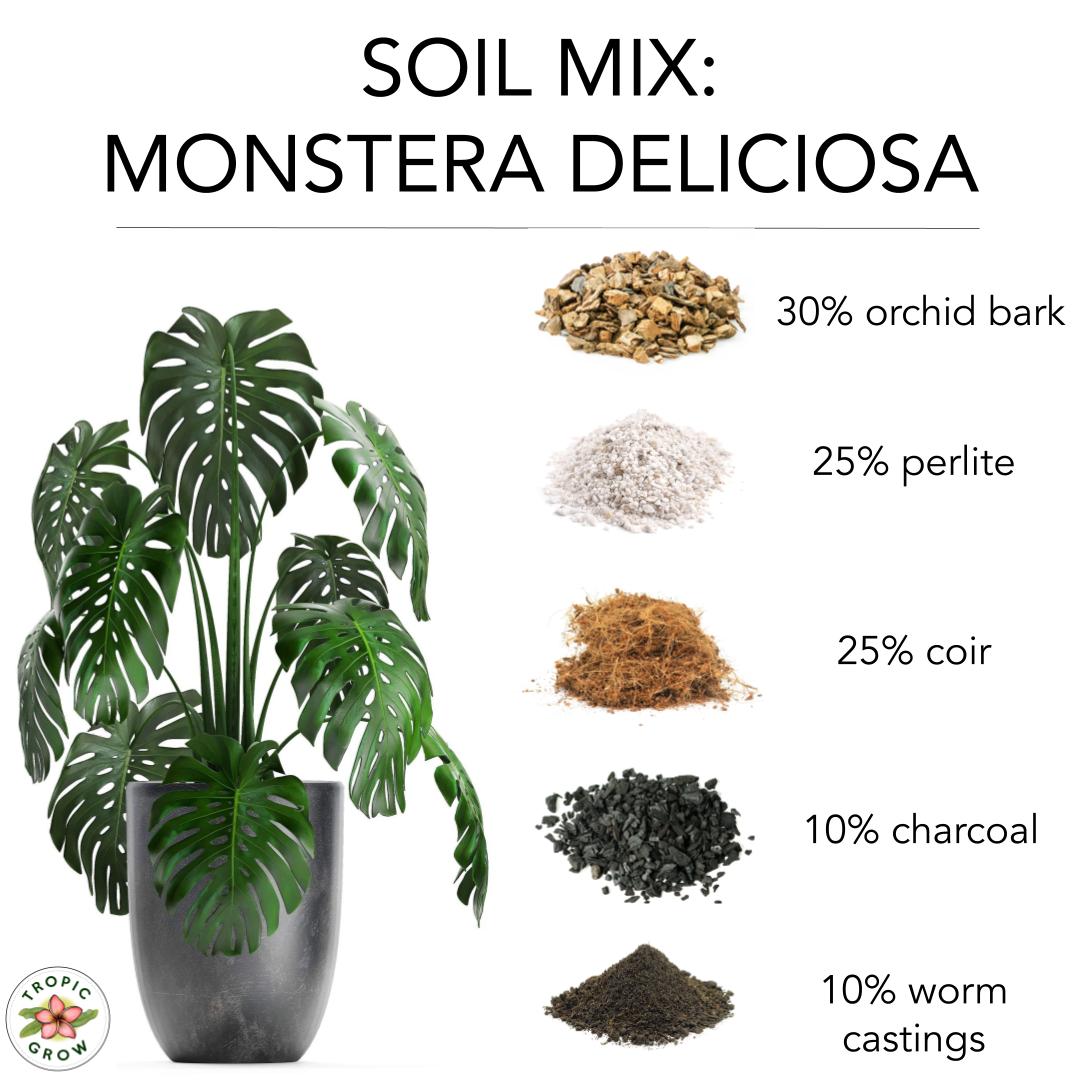
The key ingredients in a Monstera mix include peat moss, perlite, and bark. These components create an airy and well-draining environment. Peat moss retains moisture, while perlite and bark provide aeration.
| Ingredient | Function |
|---|---|
| Peat Moss | Moisture Retention |
| Perlite | Aeration |
| Bark | Drainage |
Organic Vs. Inorganic
Understanding the difference between organic and inorganic components is crucial. Organic materials include peat moss, compost, and bark. These components decompose over time, enriching the soil with nutrients.
Inorganic materials, such as perlite, vermiculite, and sand, do not decompose. They provide excellent drainage and aeration, preventing root rot. Combining both types ensures a healthy balance for your Monstera.
- Organic: Peat moss, compost, bark
- Inorganic: Perlite, vermiculite, sand
Creating The Perfect Potting Mix
Creating the perfect potting mix for your Monstera is essential. It ensures your plant thrives and grows strong. A well-balanced mix provides the right nutrients and drainage. Let’s dive into the essential components and step-by-step guide to make the best Monstera mix.
Essential Components
A good potting mix for Monstera includes several key ingredients. Here are the main components:
- Peat Moss: Retains moisture and provides nutrients.
- Perlite: Improves drainage and aeration.
- Bark: Adds structure and promotes root growth.
- Coco Coir: Retains moisture and is eco-friendly.
- Compost: Provides essential nutrients.
Step-by-step Guide
Follow these steps to create the perfect potting mix for your Monstera:
- Gather Materials: Collect peat moss, perlite, bark, coco coir, and compost.
- Mix Ratios: Use a ratio of 3 parts peat moss, 2 parts perlite, 1 part bark, 1 part coco coir, and 1 part compost.
- Combine Ingredients: In a large container, thoroughly mix all the components.
- Check Moisture: Ensure the mix is slightly damp but not wet.
- Fill Pot: Place a layer of gravel at the bottom of your pot for extra drainage, then fill with your potting mix.
- Plant Monstera: Gently place your Monstera in the pot, ensuring the roots are covered.
Creating the perfect potting mix is simple with the right components. Your Monstera will thrive in this well-balanced, nutrient-rich environment.

Nutrient Requirements
Monstera plants need specific nutrients to thrive. Understanding these requirements ensures healthy growth. Let’s delve into the essential nutrients and fertilization tips for the best Monstera mix.
Essential Nutrients
Monstera plants need a mix of macronutrients and micronutrients. The most important macronutrients include:
- Nitrogen (N): Promotes leaf growth and vibrant green color.
- Phosphorus (P): Supports root development and flowering.
- Potassium (K): Enhances overall plant health and resistance to disease.
Micronutrients are equally important. These include:
- Iron (Fe): Prevents chlorosis and yellowing of leaves.
- Magnesium (Mg): Crucial for photosynthesis and enzyme activation.
- Zinc (Zn): Helps in hormone production and growth regulation.
Fertilization Tips
Proper fertilization practices ensure your Monstera gets the nutrients it needs. Follow these tips for the best results:
- Use a balanced, water-soluble fertilizer with an N-P-K ratio of 20-20-20.
- Fertilize once a month during the growing season (spring and summer).
- Reduce fertilization frequency to every 2-3 months during the dormant season (fall and winter).
- Always dilute the fertilizer to half the recommended strength to avoid overfeeding.
- Ensure the soil is moist before applying fertilizer to prevent root burn.
By following these tips, you can maintain a healthy, thriving Monstera plant.
Watering Techniques
Proper watering techniques are crucial for the health of your Monstera plant. Understanding how often and how much to water can be challenging. Ensuring good drainage is also essential. Let’s break down the best practices.
Frequency And Amount
Water your Monstera once a week during spring and summer. In fall and winter, reduce watering to every two weeks. Always check the soil before watering. It should be dry at least two inches deep. Overwatering can lead to root rot and other issues.
When you water, do it thoroughly. Water until it runs out from the drainage holes. This ensures that the roots get enough moisture. Avoid letting the plant sit in standing water.
Drainage Importance
Good drainage is key to a healthy Monstera. Use a pot with drainage holes. This allows excess water to escape. A well-draining soil mix is also important. You can add perlite or bark to improve drainage.
Poor drainage can cause water to accumulate. This can lead to root rot and other problems. Always ensure the pot and soil allow excess water to exit freely.
Light And Temperature Conditions
Monstera plants thrive in specific light and temperature conditions. This ensures their growth and health. Understanding these needs helps in creating the perfect environment for your plant.
Optimal Light Levels
Monstera plants prefer bright, indirect light. Direct sunlight can scorch their leaves. Place your Monstera near a window with filtered light. East or west-facing windows are ideal.
- Bright, indirect light
- Avoid direct sunlight
- East or west-facing windows
Temperature Tolerance
Monstera plants are native to tropical regions. They thrive in warm temperatures. The ideal range is between 65°F and 85°F (18°C to 29°C). Avoid exposing them to temperatures below 50°F (10°C).
Maintain a consistent temperature for optimal growth. Sudden changes can stress the plant.
| Temperature | Condition |
|---|---|
| 65°F – 85°F (18°C – 29°C) | Optimal |
| Below 50°F (10°C) | Harmful |
Common Problems And Solutions
Dealing with common problems can be a headache for Monstera plant owners. Here, we provide solutions to tackle these issues effectively. Keep your Monstera healthy and thriving with these tips.
Pest Control
Pests can be a significant problem for Monstera plants. Here are some common pests and their solutions:
- Spider Mites: These tiny pests cause yellowing leaves and webbing. Spray neem oil or insecticidal soap.
- Mealybugs: White, cotton-like masses on leaves. Use rubbing alcohol on a cotton swab to remove them.
- Scale Insects: Brown, shell-like bumps on stems. Scrape off gently and apply horticultural oil.
Regularly inspect your Monstera for signs of pests. Early detection is key to keeping your plant pest-free.
Disease Management
Diseases can also affect Monstera plants. Here are some common diseases and their solutions:
| Disease | Symptoms | Solution |
|---|---|---|
| Root Rot | Yellowing leaves, mushy roots | Ensure proper drainage, reduce watering |
| Leaf Spot | Brown spots on leaves | Remove affected leaves, improve air circulation |
| Powdery Mildew | White powdery coating on leaves | Increase light, apply fungicide |
To prevent diseases, avoid overwatering and ensure good air circulation around your Monstera.
Repotting And Propagation
Repotting and propagation are essential aspects of Monstera plant care. Repotting helps the plant grow healthily by providing more space for its roots. Propagation allows you to create new plants from an existing one, expanding your collection or sharing with friends.
When To Repot
Repotting your Monstera is necessary when the roots outgrow the current pot. Check for roots coming out of the drainage holes. This is a sign that your plant needs more space. Usually, repotting is done every 1-2 years.
Spring or early summer is the best time to repot. This is when the plant is actively growing. Choose a pot that is 2-4 inches larger in diameter than the current one. Ensure it has good drainage to prevent root rot.
Propagation Methods
Propagation can be done through stem cuttings or air layering. Stem cuttings are the most common method. Cut a healthy stem with at least one node and a leaf. Place the cutting in water or soil until roots develop.
Air layering involves wounding a section of the stem. Wrap the wound with moist sphagnum moss and cover it with plastic wrap. Roots will form at the wound site. Once roots appear, cut the stem below the roots and plant it in soil.
Care And Maintenance Tips
Caring for your Monstera plant ensures it remains healthy and beautiful. Regular maintenance is key to its growth and vitality. Here are some essential care and maintenance tips.
Pruning Advice
Regular pruning helps keep your Monstera plant in shape. Trim dead or yellowing leaves to encourage new growth. Use clean, sharp scissors or pruning shears.
Always cut just above a leaf node. This promotes healthy growth. Pruning also controls the size of the plant. Remove any damaged or diseased parts immediately.
If your Monstera is growing too large, prune back the stems. This helps maintain its shape and encourages bushier growth.
Seasonal Care
Monstera plants have different needs during each season. Adjust your care routine accordingly.
| Season | Care Tips |
|---|---|
| Spring | Increase watering frequency. Start fertilizing monthly. |
| Summer | Water regularly. Ensure bright, indirect light. |
| Fall | Reduce watering. Stop fertilizing. |
| Winter | Water sparingly. Keep away from cold drafts. |
In spring and summer, your Monstera grows actively. Water more often and provide bright, indirect light. Fertilize monthly to support growth.
During fall and winter, growth slows down. Reduce watering and stop fertilizing. Keep the plant away from cold drafts and direct heat sources.
Frequently Asked Questions
What Is The Best Soil Mix For Monstera?
The best soil mix for Monstera is well-draining and aerated. Combine peat moss, perlite, and orchid bark. This mix mimics their natural habitat.
How Often Should I Water Monstera In This Mix?
Water Monstera when the top 2-3 inches of soil are dry. Overwatering can lead to root rot. Ensure proper drainage.
Can I Use Cactus Soil For Monstera?
Cactus soil alone isn’t ideal for Monstera. It’s too fast-draining. Mix it with peat moss and perlite for a balanced blend.
What Are The Benefits Of Using Orchid Bark In The Mix?
Orchid bark improves aeration and drainage in the soil. It helps prevent root rot and mimics Monstera’s natural environment.
Conclusion
Choosing the right mix for your Monstera is crucial. It ensures healthy growth. With the right soil, your plant thrives. Remember to balance drainage and nutrients. Your Monstera will thank you with vibrant leaves. Happy planting!
Leave a Reply