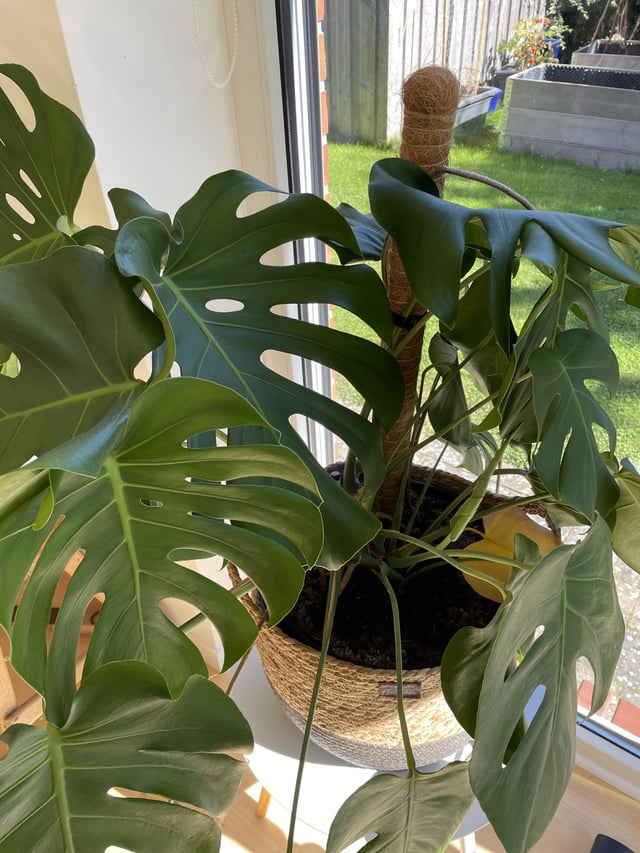
To make your Monstera plant climb, you need a few simple steps. Monstera, a popular houseplant, loves to climb when given the right support.
Monstera plants naturally grow upwards in their native tropical environments. They use trees and other structures to help them reach sunlight. In your home, you can mimic this behavior. By providing a support structure, you can encourage your Monstera to climb and thrive.
This not only helps the plant grow healthier but also adds a touch of nature to your living space. In the following sections, we’ll explore the steps to make your Monstera climb, ensuring it remains a beautiful and vibrant part of your home.
Introduction To Monstera
Monstera plants can climb with the right support. Use a moss pole or trellis to guide their growth. Secure the stems gently to encourage upward movement.
Monstera plants are a favorite among plant lovers. Their unique leaves and easy care make them popular. Many people want to know how to make their Monstera climb. This blog will help you understand Monstera and how to care for it.Origin And Characteristics
Monstera plants come from tropical rainforests. They grow in Central and South America. These plants are known for their large, heart-shaped leaves. The leaves have natural holes, which give them a unique look. Monstera plants can grow very tall. In the wild, they climb trees to reach sunlight. They use aerial roots to attach to surfaces.Popular Varieties
There are several types of Monstera plants. The most common is Monstera deliciosa. It has large, glossy leaves with deep cuts and holes. Another popular variety is Monstera adansonii. Its leaves are smaller and have more holes. Monstera obliqua is rare but highly sought after. Its leaves are thin and delicate, with many holes. Each variety has its unique charm and beauty. “`
Benefits Of Climbing Monstera
Monstera plants, with their lush green leaves and unique patterns, are popular indoor plants. Encouraging your Monstera to climb can greatly benefit its health and appearance. Let’s explore the key benefits of having a climbing Monstera.
Healthier Growth
Climbing Monstera plants tend to have healthier growth. When they climb, they mimic their natural environment. This allows them to grow stronger and more resilient. Vertical growth promotes better air circulation around the leaves. This reduces the risk of fungal infections and pest problems. Also, climbing helps the plant receive more light. This leads to better photosynthesis and overall health.
Aesthetic Appeal
A climbing Monstera adds an exotic touch to any room. Its large, split leaves create a stunning visual display. As the plant climbs, it can cover walls, poles, or trellises. This transforms plain spaces into vibrant green areas. The vertical growth of a climbing Monstera adds depth and dimension to your decor. It makes your living space feel more dynamic and alive.
Choosing The Right Support
Monstera plants are known for their large, beautiful leaves. To help them grow well, they need proper support. Choosing the right support is key for a healthy Monstera. It helps the plant climb and shows off its beauty. Let’s explore different support types and how to pick the best one.
Types Of Supports
There are various types of supports for Monstera plants. Each type has its own benefits.
Moss Poles: Moss poles are popular. They mimic the natural environment. Monstera roots can cling to the moss, making it easy to climb.
Trellises: Trellises are also common. They provide a sturdy structure. You can find them in various sizes and shapes.
Wooden Stakes: Wooden stakes are simple but effective. They give strong support. They are also easy to set up.
Wire Frames: Wire frames offer flexibility. You can bend them to fit your plant’s growth. They are lightweight but strong.
Selecting The Best Support
Choosing the best support depends on your plant’s needs. Consider the size of your Monstera. Bigger plants need stronger supports.
Think about your space. If you have limited space, a trellis might work well. They can fit in corners or along walls.
Check the material of the support. Moss poles retain moisture, which is great for Monstera roots. Wooden stakes and wire frames are sturdy but may need more care.
Finally, consider the look. You want the support to blend with your decor. Choose a support that enhances your plant’s beauty.
With the right support, your Monstera will thrive. It will grow tall and healthy, showcasing its stunning leaves.
Preparing The Plant
Preparing your Monstera plant for climbing is an essential step. Ensuring the right conditions will help your plant grow strong and healthy. This involves initial care, pruning, and trimming.
Initial Care Tips
Start with a healthy Monstera plant. Place it in a spot with indirect light. Water the plant when the top inch of soil feels dry. Ensure the pot has good drainage to prevent root rot. Use a balanced liquid fertilizer every month during the growing season.
Pruning And Trimming
Regular pruning keeps your Monstera in shape. Trim dead or yellowing leaves to promote new growth. Use clean, sharp scissors to avoid damaging the plant. Cut just above a node to encourage branching. Prune any long stems to maintain a bushier appearance. This will help your Monstera focus its energy on climbing.
Training Monstera To Climb
Monstera plants are popular for their striking leaves and easy care. Training your Monstera to climb enhances its growth and appearance. Providing a support structure helps the plant mimic its natural climbing behavior. This guide will help you train your Monstera to climb effectively.
Attaching To The Support
First, choose a sturdy support for your Monstera. Use a moss pole, trellis, or stake. Place the support in the soil near the plant’s base. Ensure the support is tall enough for future growth. Secure the support firmly in the soil to prevent wobbling.
Next, gently attach the Monstera stems to the support. Use soft ties or garden tape to avoid damage. Tie the stems loosely to allow for growth. Position the ties below the leaf nodes for better stability. Check the ties periodically and adjust as needed.
Guiding The Vines
Encourage the Monstera vines to climb by guiding them towards the support. Gently wrap the vines around the support structure. If a vine resists, try a different angle. Be patient and avoid forcing the plant.
Regularly check the vines and adjust their direction. This ensures even growth and coverage. Trim any unruly vines to maintain a neat appearance. Provide adequate light and water to support healthy growth. A happy Monstera will climb enthusiastically.

Maintaining Climbing Monstera
Maintaining a climbing Monstera requires consistent care and attention. This ensures the plant thrives and grows healthily. Proper maintenance helps the Monstera to climb effectively and remain vibrant.
Watering And Feeding
Water the Monstera when the top inch of soil feels dry. Use a well-draining potting mix to avoid waterlogging. Overwatering can lead to root rot. Underwatering can cause the leaves to wilt. Use filtered or distilled water if possible. Tap water with high chlorine can harm the plant.
Feed the Monstera with a balanced liquid fertilizer every month during the growing season. Reduce feeding in the winter months. Over-fertilizing can burn the roots. Under-fertilizing can stunt growth. Follow the instructions on the fertilizer package for best results.
Regular Maintenance
Regularly check for pests on the Monstera leaves. Common pests include spider mites and scale insects. Use insecticidal soap to treat infestations. Prune dead or yellowing leaves to promote new growth. Trim long aerial roots if they become unruly.
Support the climbing Monstera with a moss pole or trellis. Secure the stems with plant ties or soft string. Gently guide the stems towards the support structure. Regularly rotate the plant to ensure even growth. Keep the Monstera away from cold drafts and direct sunlight.
Common Issues And Solutions
Helping your Monstera climb can be rewarding, but it comes with challenges. Here are some common issues and their solutions to keep your Monstera healthy and thriving.
Dealing With Pests
Pests can harm your Monstera and stunt its growth. Look out for these common pests:
- Spider Mites: Small, red bugs that create webs on leaves.
- Mealybugs: White, cotton-like insects that cluster on stems.
- Scale Insects: Brown, shell-like pests that attach to leaves.
To treat these pests, follow these steps:
- Isolate the affected plant.
- Wipe leaves with a damp cloth.
- Spray with insecticidal soap or neem oil.
- Repeat treatment every week until pests are gone.
Addressing Growth Problems
Sometimes, your Monstera may not climb as expected. Here are some growth problems and their solutions:
| Problem | Solution |
|---|---|
| Yellowing Leaves | Check soil moisture. Water only when top inch is dry. |
| Leggy Growth | Provide more light. Use a grow light if needed. |
| Slow Growth | Fertilize monthly with a balanced houseplant fertilizer. |
By addressing these issues, your Monstera will climb and flourish.

Expert Tips For Thriving Plants
Monstera plants are a popular choice for many plant enthusiasts. These plants not only add beauty to your space but also bring a touch of nature indoors. To help your Monstera thrive, it’s important to ensure they climb well. Here are some expert tips to keep your Monstera healthy and climbing.
Advanced Care Techniques
To make your Monstera climb, you need to provide proper support. A moss pole or trellis works best. Place the pole or trellis in the pot’s center. Tie the stems gently to the support using plant ties or soft string. Ensure the ties are not too tight to avoid damaging the plant.
Regular pruning helps your Monstera grow well. Cut back any dead or yellow leaves. Trim excess stems to direct energy to healthy growth. Fertilize your Monstera every month during the growing season. Use a balanced, water-soluble fertilizer for best results.
Long-term Plant Health
Long-term health of your Monstera is vital for its climbing ability. Water your plant when the top inch of soil feels dry. Avoid overwatering as it can cause root rot. Ensure the pot has drainage holes to prevent waterlogging.
Provide bright, indirect light for your Monstera. Too much direct sunlight can scorch the leaves. Low light can slow down its growth. Rotate the plant every few weeks to ensure even growth on all sides.
Check for pests regularly. Common pests include spider mites and scale. If you see any, treat the plant with insecticidal soap or neem oil.
| Care Task | Frequency | Tips |
|---|---|---|
| Watering | When top inch of soil is dry | Use room temperature water |
| Fertilizing | Monthly during growing season | Use balanced, water-soluble fertilizer |
| Pruning | As needed | Remove dead or yellow leaves |
| Light | Daily | Bright, indirect light |
| Pest Check | Weekly | Use insecticidal soap if needed |
Frequently Asked Questions
How Can I Train My Monstera To Climb?
To train your Monstera to climb, provide it with a moss pole or trellis. Secure the stems gently using plant ties. Ensure the pole is moist to encourage aerial roots to attach.
What Materials Help Monstera Climb?
Materials like moss poles, trellises, and coco coir poles help Monstera climb. These materials mimic natural tree trunks, encouraging aerial root attachment.
How Often Should I Water Climbing Monstera?
Water your climbing Monstera when the top inch of soil is dry. Consistent moisture supports healthy growth. Avoid overwatering to prevent root rot.
Do Monsteras Need Light To Climb?
Monsteras need bright, indirect light to climb effectively. Insufficient light can hinder growth and climbing ability. Avoid direct sunlight to prevent leaf burn.
Conclusion
Helping your Monstera climb can enhance its growth and beauty. Use supports like poles or trellises to guide the plant. Regularly tie the stems to the support to keep them secure. Ensure the plant gets enough light and water. Proper care keeps your Monstera healthy and vibrant.
Enjoy watching your plant thrive as it reaches new heights. Happy gardening!
Leave a Reply