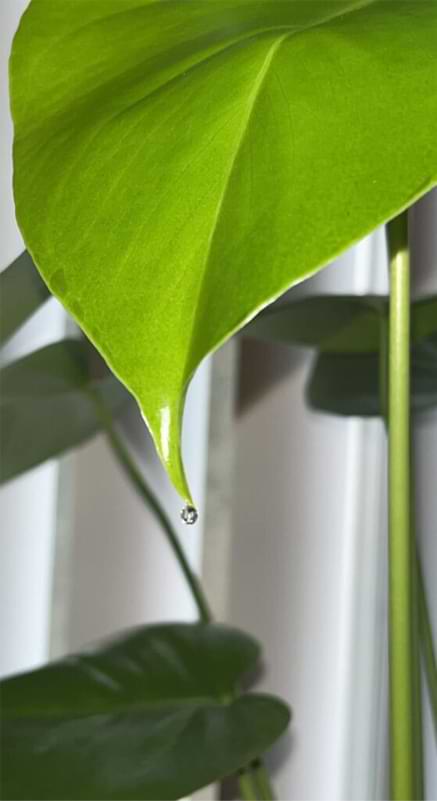
Monstera leaves drip water due to a process called guttation. This happens when the plant expels excess moisture.
Monstera plants are popular for their large, beautiful leaves. Sometimes, you may notice drops of water on these leaves. This phenomenon is known as guttation. It occurs when the plant releases extra water through tiny openings. These openings are called hydathodes.
Guttation usually happens at night or early morning. The plant absorbs more water than it needs. The extra water is then expelled. This process is normal and not a cause for concern. Understanding guttation can help you care for your Monstera better. It shows that your plant is healthy and well-hydrated. So, why do Monstera leaves drip water? Now you know!
Introduction To Monstera Plants
Monstera plants are beloved by plant enthusiasts around the world. These tropical beauties are known for their large, glossy leaves with unique splits and holes. Originating from the rainforests of Central and South America, Monstera plants thrive in humid environments. They are often referred to as “Swiss Cheese Plants” due to the appearance of their leaves.
Monstera plants are not only visually appealing but also relatively easy to care for. They can adapt to various indoor conditions, making them a popular choice for homes and offices. Their ability to purify air adds to their appeal. Let’s explore some popular species and unique characteristics of Monstera plants.
Popular Species
There are several species of Monstera plants that are popular among plant lovers. The most well-known is Monstera deliciosa. It is famous for its large, split leaves. Monstera adansonii, also known as the “Swiss Cheese Vine,” is another favorite. It has smaller leaves with more holes. Monstera obliqua is rare and prized for its delicate, lace-like leaves.
Unique Characteristics
Monstera plants have several unique features that make them stand out. Their leaves develop splits and holes as they mature. This process is called fenestration. Fenestration helps the plant withstand strong winds and heavy rain in its natural habitat. Monstera plants also have aerial roots. These roots help them climb trees and absorb moisture from the air.
Another interesting characteristic is their ability to “sweat.” Monstera leaves can drip water, especially in humid conditions. This phenomenon is called guttation. It happens when the plant absorbs more water than it can use. The excess water is released through special cells at the leaf edges.
Natural Habitat Of Monstera
The natural habitat of the Monstera plant is both fascinating and crucial to understanding its behavior. One of the most intriguing behaviors of the Monstera is its leaves dripping water. To truly grasp why this occurs, it is essential to explore the environment in which it thrives.
Tropical Origins
Monstera plants originate from tropical rainforests. These regions are known for their dense canopies and high humidity. In the wild, Monstera plants grow under larger trees, receiving filtered sunlight.
This natural shading helps them avoid direct sunlight. Filtered sunlight is essential for their growth. The rainforests also have a high level of moisture in the air. This creates a perfect environment for Monstera plants.
Climate Influence
The climate in tropical rainforests significantly influences the Monstera plant’s behavior. The combination of high humidity and frequent rainfall impacts how the plant manages water. Rainforest plants, including Monstera, have adapted to efficiently process and release excess water.
This adaptation is crucial for their survival. Monstera plants absorb water through their roots. They also absorb water from the air. Due to the humid environment, they often have more water than they need.
To prevent waterlogging, they release excess water. This is done through a process called guttation. Guttation causes the Monstera leaves to drip water. This process helps maintain the plant’s health.
| Factor | Impact on Monstera |
|---|---|
| Humidity | Promotes water absorption and guttation. |
| Filtered Sunlight | Prevents leaf burn and supports growth. |
| Frequent Rain | Ensures constant water supply. |
Understanding the natural habitat of Monstera plants helps explain their unique behaviors. The tropical origins and climate influence play a vital role. This knowledge can aid in providing the best care for your Monstera at home.
Understanding Plant Hydration
Monstera leaves dripping water might seem mysterious. This natural process helps the plant stay healthy. Understanding plant hydration reveals why this happens.
Water Absorption
Plants absorb water through their roots. The water travels up the stem to the leaves. Monstera plants, like many others, need water to survive. They draw water from the soil using their roots. This process is crucial for their growth and health.
The roots take in water and nutrients from the soil. This mixture moves upward through the plant. Every part of the plant gets the hydration it needs. This ensures the plant stays strong and vibrant.
Transpiration Process
Transpiration is the process where plants release water. This happens through small openings called stomata on the leaves. Monstera plants have many of these tiny pores. Water moves from the roots to the leaves. When the plant has excess water, it releases some as droplets.
The stomata open to let out water vapor. This helps the plant cool down. It also helps with nutrient movement within the plant. Transpiration is vital for maintaining plant health and balance. This process is why you might see water dripping from Monstera leaves.
In essence, transpiration is a natural way for plants to manage excess water. It ensures the plant doesn’t get waterlogged.

What Is Guttation?
Have you ever noticed water droplets on the tips of your Monstera leaves? This phenomenon is known as guttation. It’s a natural process and quite fascinating. Let’s explore what guttation is and why it happens.
Definition
Guttation is the process where plants exude water droplets from the tips or edges of their leaves. This is not the same as dew, which forms from condensation. Guttation specifically happens when water is pushed out from the plant’s internal system.
Biological Function
The biological function of guttation is to release excess water from the plant. This helps maintain a balance of water pressure within the plant. When soil moisture levels are high, the plant absorbs more water. The excess water needs to be expelled to avoid damage.
Guttation occurs through specialized structures called hydathodes. These are located at the edges of the leaves. During the night, stomata (tiny openings on leaves) close, causing root pressure to build up. This pressure forces water out through the hydathodes.
It’s important to note that guttation water may contain various substances. These include minerals, sugars, and other organic compounds. This makes the droplets slightly different from regular water.
| Aspect | Description |
|---|---|
| Process | Exudes water droplets |
| Occurs through | Hydathodes |
| Time | Mostly at night |
| Contains | Minerals, sugars, organic compounds |
Understanding guttation can help you better care for your Monstera. If you see water droplets, it’s usually a sign that your plant is healthy and well-hydrated.
Causes Of Guttation In Monstera
Monstera leaves drip water due to guttation, which happens when the plant releases extra moisture. This occurs often in high humidity or overwatering situations.
Guttation is a common phenomenon in Monstera plants. It happens when droplets of water appear on the leaf edges. This is not a sign of disease. Instead, it is a natural process. Several factors can cause guttation in Monstera plants. Let’s explore these factors in detail.Environmental Factors
Monstera plants thrive in humid environments. High humidity can lead to guttation. When the air is moist, the plant’s roots absorb more water. This excess water gets pushed out through the leaf edges. Temperature changes also play a role. Warm days and cool nights can increase guttation. The plant’s internal pressure rises, forcing out water droplets. Light conditions matter too. Bright, indirect light promotes healthy growth. But too much direct sunlight can cause stress. This stress can lead to guttation.Soil Conditions
The type of soil affects guttation. Well-draining soil helps prevent excess water. But if the soil retains too much water, guttation may occur. Overwatering is another key factor. When the soil is too wet, the plant absorbs more water than it needs. This excess water exits through the leaves. Nutrient levels in the soil also impact guttation. High levels of certain minerals can increase water uptake. This can lead to more water being pushed out through the leaves. “`
How To Identify Guttation
Monstera plants are popular houseplants known for their unique leaves. Sometimes, you might notice water droplets on the edges of their leaves. This is called guttation. Guttation happens when the plant releases excess water through tiny openings. Identifying guttation can be simple if you know what to look for.
Visual Indicators
Look for small water droplets on the leaf edges. These droplets are clear and appear early in the morning. The drops may dry up, leaving a white residue. This residue is harmless and can be wiped off.
Common Mistakes
Don’t confuse guttation with dew. Dew forms on the leaf surface from the air. Guttation comes from inside the plant. Also, check for pests. Pests can cause similar symptoms. But guttation is usually uniform on the leaf edges. Pests often cause irregular damage.
Is Guttation Harmful?
Monstera leaves drip water due to a process called guttation. This natural occurrence is not harmful to the plant. It helps the plant release extra moisture.
Monstera leaves dripping water is a natural process. This process is called guttation. Many plant owners worry if guttation is harmful. Let’s explore this topic in detail.Potential Issues
Guttation may cause some minor issues. For example, the water droplets can leave stains on furniture. If the water stays on the leaves, it can lead to fungal growth. Fungus can harm the plant over time. Sometimes, guttation water contains minerals and salts. These can accumulate on the leaf edges and cause damage.Preventive Measures
There are ways to manage guttation. You can reduce watering frequency. This helps control moisture levels. Ensure your Monstera has good drainage. Proper drainage prevents water from pooling in the pot. Increase air circulation around the plant. This helps the leaves dry faster. Place a tray under the plant to catch drips. It keeps surfaces clean and dry. Monitor your plant’s health regularly. Address any signs of fungal growth immediately. “`
Care Tips For Healthy Monstera
Monstera plants, also known as Swiss cheese plants, are popular houseplants. They are known for their unique leaves and easy care. Proper care is essential for a healthy Monstera. Below are some tips to keep your plant thriving.
Optimal Watering
Water your Monstera once the top inch of soil feels dry. Overwatering can lead to root rot. Make sure the pot has drainage holes. This prevents water from sitting at the bottom.
Use room-temperature water. This avoids shocking the plant. Water deeply until it runs out of the drainage holes.
Proper Humidity Levels
Monsteras thrive in high humidity. Aim for 60% humidity or higher. You can use a humidifier to maintain this level. Grouping plants together also helps increase humidity.
Misting the leaves can be beneficial. It mimics their natural tropical environment. Remember to wipe the leaves occasionally. This prevents dust build-up and helps the plant breathe.
Frequently Asked Questions
Why Do Monstera Leaves Drip Water?
Monstera leaves drip water as a natural process called guttation. This occurs when excess moisture is expelled from the plant.
Is It Normal For Monstera Leaves To Drip?
Yes, it is normal for Monstera leaves to drip water. It indicates the plant is healthy and well-hydrated.
How Can I Stop Monstera Leaves From Dripping?
To reduce dripping, adjust watering schedules and ensure proper soil drainage. Avoid overwatering your Monstera plant.
When Do Monstera Leaves Typically Drip Water?
Monstera leaves usually drip water during high humidity or after heavy watering. This is a natural response.
Conclusion
Monstera leaves drip water due to a process called guttation. This is normal. It helps the plant release excess water. Guttation happens mainly at night. It shows your plant is healthy. Keep your Monstera in good conditions. Ensure proper watering and humidity.
Enjoy the beauty of your Monstera. Happy gardening!
Leave a Reply