
Yes, you should trim your Monstera plant. Trimming helps the plant stay healthy and grow better.
Monstera plants, known for their large, split leaves, can become quite big. Trimming is necessary to keep them in shape and thriving. Pruning can help remove dead or damaged leaves, promote new growth, and prevent the plant from becoming too unruly.
Plus, cutting back your Monstera can improve its overall look, making it a beautiful addition to your home. In this blog post, we will explore the reasons why trimming is important, how to do it properly, and tips to keep your Monstera healthy and vibrant. Stay with us to learn the best practices for Monstera care.
Introduction To Monstera Care
Caring for a Monstera plant can be both rewarding and straightforward. Known for its unique, perforated leaves, the Monstera adds a tropical flair to any space. It’s essential to understand the basics of its care to keep it thriving.
Monstera plants are popular because they are easy to care for. They grow well in various environments and adapt easily. Regular maintenance ensures your Monstera looks its best all year round.
Plant Overview
The Monstera, often called the Swiss Cheese Plant, is native to tropical rainforests. It thrives in warm, humid conditions. This plant can grow both indoors and outdoors, depending on the climate.
Monsteras have large, glossy leaves with natural holes. These holes help the plant withstand heavy rains and strong winds. Monsteras can grow up to 10 feet tall indoors, making them a striking addition to any room.
Common Varieties
Several varieties of Monstera exist, each with unique characteristics. The most common is Monstera Deliciosa. It features large, split leaves that develop holes as they mature. This variety is the most popular for indoor growing.
Another common variety is Monstera Adansonii. Also known as the Swiss Cheese Vine, it has smaller leaves with more holes. This variety is perfect for hanging baskets or climbing structures.
Monstera Borsigiana is a smaller, faster-growing relative of Monstera Deliciosa. Its leaves are similar in appearance but slightly smaller. This variety is easier to manage in smaller spaces.
Each variety requires similar care, but their growth habits may differ. Knowing the specific needs of your Monstera variety helps ensure its health and beauty.

Benefits Of Trimming Monstera
Trimming your Monstera plant offers several benefits. Regular pruning encourages growth and helps maintain a neat appearance. Understanding these benefits can ensure your Monstera thrives and looks its best.
Promotes Growth
Trimming Monstera stimulates new growth. Removing old or damaged leaves redirects energy. This energy then helps healthy leaves and stems grow. Your plant will look fuller and more vibrant.
Enhances Shape
Pruning helps shape your Monstera. You can control its size and direction. Trim stray or overgrown stems to keep a tidy look. A well-shaped Monstera adds beauty to any space.
When To Trim Monstera
Knowing when to trim your Monstera is crucial for its health and growth. Trimming keeps the plant looking good and helps it grow better. So, how do you know the right time to trim your Monstera? Let’s dive into some key considerations.
Seasonal Considerations
Spring and summer are the best times to trim Monstera. During these seasons, the plant grows actively. Trimming during this period helps it recover faster. Avoid trimming in winter. The plant’s growth slows down then, making it harder for it to heal.
Signs Your Plant Needs Trimming
Overgrown vines are a clear sign. If the plant looks too bushy, it needs a trim. Yellow or brown leaves indicate the need for trimming. These leaves take energy away from healthy parts. Check for any damaged or diseased parts. Removing these helps the plant stay healthy.
Tools For Trimming
Trimming your Monstera plant helps maintain its health and beauty. To do this effectively, you need the right tools. Using proper tools makes the process easier and ensures you don’t harm the plant.
Essential Tools
To start, you need a pair of sharp pruning shears. Sharp shears make clean cuts, reducing damage to the plant. A pair of garden gloves is also essential. Gloves protect your hands from dirt and possible irritation. A clean cloth and rubbing alcohol are necessary. Use these to disinfect your tools before and after trimming. This prevents the spread of disease between plants.
Maintenance Of Tools
Keeping your tools in good condition is important. Always clean your pruning shears after use. Wipe them with a damp cloth to remove sap and debris. Sharpen the blades regularly. Sharp blades make cleaner cuts and are safer to use.
Store your tools in a dry place. Moisture can cause rust and damage your tools. Use oil on the metal parts occasionally. This helps to prevent rust and keeps the tools working smoothly. Proper maintenance ensures your tools last longer and work efficiently.
How To Trim Monstera
Trimming your Monstera plant is important for its health and growth. Knowing how to trim it properly ensures the plant stays beautiful and thrives. Follow this guide to keep your Monstera in great shape.
Step-by-step Guide
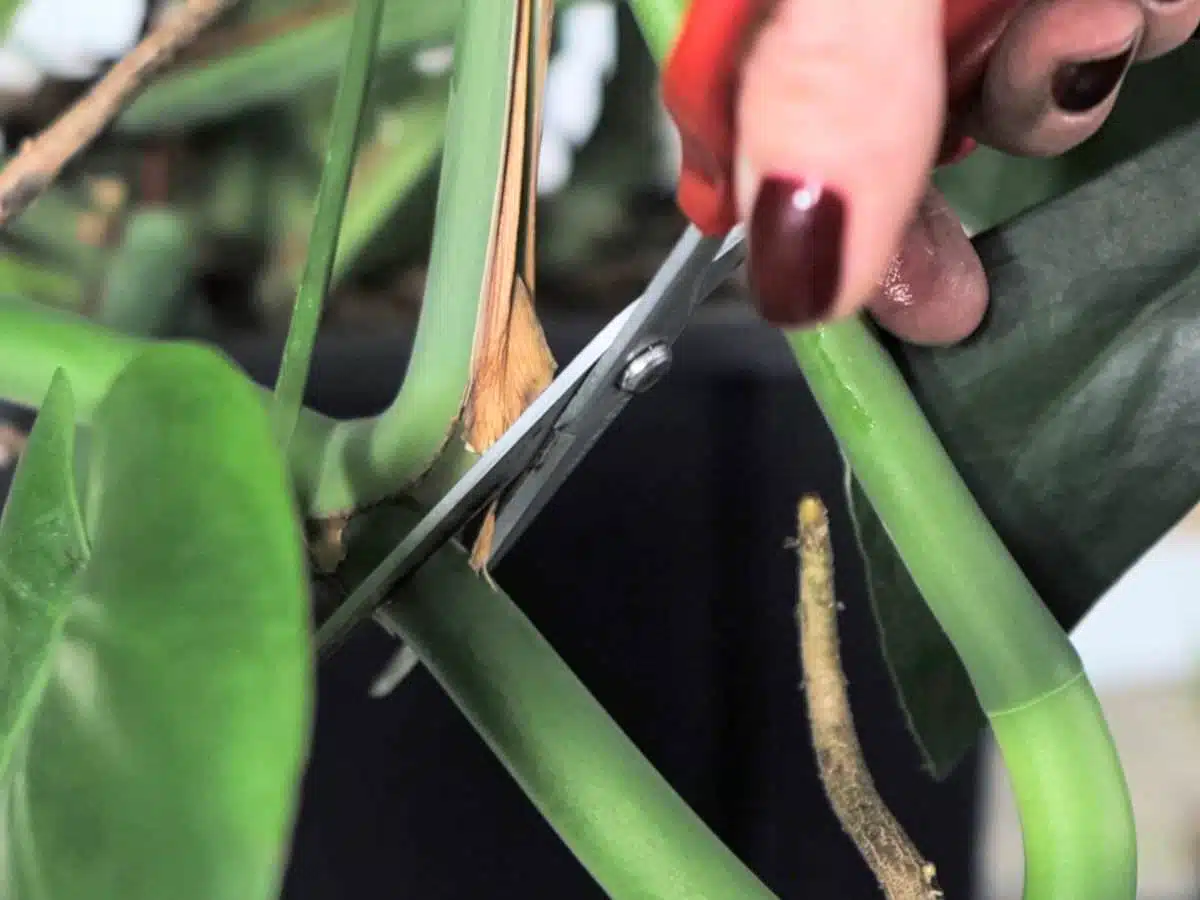
Trimming a Monstera is easy if you follow these steps:
- Gather your tools: Use clean, sharp scissors or pruning shears.
- Identify the stems: Look for stems that are leggy, damaged, or too long.
- Cut at the node: Make the cut just above a node, where leaves join the stem.
- Remove yellow leaves: Cut off any yellow or dead leaves to keep the plant healthy.
- Trim aerial roots: If the aerial roots are too long, trim them back slightly.
Common Mistakes
Avoid these mistakes to ensure you don’t harm your Monstera:
- Using dull tools: Always use sharp, clean scissors or shears.
- Cutting too much: Don’t remove more than 25% of the plant at once.
- Cutting in the wrong place: Make sure to cut just above a node.
- Neglecting the roots: Trim aerial roots if they become too long.
Post-trimming Care
After trimming your Monstera, it is important to give it the right care. Proper post-trimming care ensures your plant stays healthy and continues to thrive. This section will guide you through the essential steps, including watering and fertilization, to keep your Monstera in top shape.
Watering Tips
Watering your Monstera correctly after trimming is crucial. Here are some tips to follow:
- Always check the soil moisture before watering. Insert your finger 2 inches deep into the soil.
- Water only if the soil feels dry. Overwatering can harm the plant.
- Use room-temperature water to avoid shocking the roots.
- Ensure the pot has good drainage to prevent waterlogging.
Remember, Monstera prefers slightly moist soil. But never let it sit in water.
Fertilization
Post-trimming, your Monstera will need nutrients to recover. Here’s how to fertilize it properly:
- Choose a balanced liquid fertilizer. Look for a 20-20-20 ratio.
- Dilute the fertilizer to half strength. This prevents root burn.
- Apply the fertilizer once a month during the growing season. Do not fertilize in winter.
Regular fertilization helps your Monstera develop strong roots and lush leaves. But avoid over-fertilizing. Too many nutrients can damage the plant.
By following these simple steps, you ensure your Monstera stays healthy and vibrant after trimming. Proper watering and fertilization are key to a thriving plant.
Dealing With Pests And Diseases
Dealing with pests and diseases is crucial for keeping your Monstera healthy. Neglecting these issues can lead to severe damage and even kill your plant. Proper care and timely intervention can prevent most problems.
Common Pests
Monstera plants often attract pests like spider mites, mealybugs, and scale insects. These pests suck the sap from the plant, causing it to weaken. You might notice yellowing leaves, sticky residue, or tiny webs. Identifying these pests early can save your plant.
Preventative Measures
Regularly inspect your Monstera for signs of pests. Clean the leaves with a damp cloth to remove dust and insects. Using insecticidal soap can help control minor infestations. Ensure your plant has good air circulation to prevent pests from thriving.
Quarantine new plants before introducing them to your collection. This step helps prevent the spread of pests. Also, avoid overwatering as it creates a favorable environment for pests and diseases. Keeping your Monstera in optimal conditions will reduce the risk of pests and diseases.
Additional Monstera Care Tips
Monstera plants are popular for their unique, split leaves and easy-care nature. To keep your Monstera thriving, follow these additional care tips. Proper care ensures your plant remains healthy and vibrant.
Repotting Advice
Repotting your Monstera is essential for its growth. Choose a pot that is 2-4 inches larger in diameter than the current one. Use a well-draining soil mix to prevent root rot.
When repotting, gently remove the plant from its old pot. Loosen the roots and place it in the new pot. Fill in with fresh soil, pressing down lightly to eliminate air pockets. Water thoroughly after repotting to help the plant settle.
Light And Humidity Requirements
Monstera plants thrive in bright, indirect light. Avoid direct sunlight as it can scorch the leaves. If natural light is limited, consider using a grow light.
Monstera plants also prefer high humidity levels. Aim for a humidity level of 60-80%. Use a humidifier or place a tray of water near the plant to increase humidity. Misting the leaves regularly can also help maintain adequate moisture.
In summary, proper care, repotting, and attention to light and humidity will keep your Monstera healthy and beautiful.

Frequently Asked Questions
How Often Should You Trim Monstera?
Trimming Monstera should be done every few months. This promotes healthy growth and prevents the plant from becoming too leggy.
What Tools Do You Need To Trim Monstera?
You’ll need sharp, clean pruning shears or scissors. This ensures precise cuts and prevents infections.
When Is The Best Time To Trim Monstera?
The best time to trim Monstera is during spring or summer. This is when the plant is actively growing.
Can You Propagate Monstera From Trimmings?
Yes, you can propagate Monstera from healthy trimmings. Place the cuttings in water until roots develop.
Conclusion
Trimming your Monstera plant is essential for its health. Regular pruning helps manage its size. It also encourages new growth. Remove yellow or damaged leaves for a better look. Use clean, sharp tools for trimming. This prevents infections. With proper care, your Monstera will thrive.
Enjoy your beautiful, healthy plant.
Leave a Reply