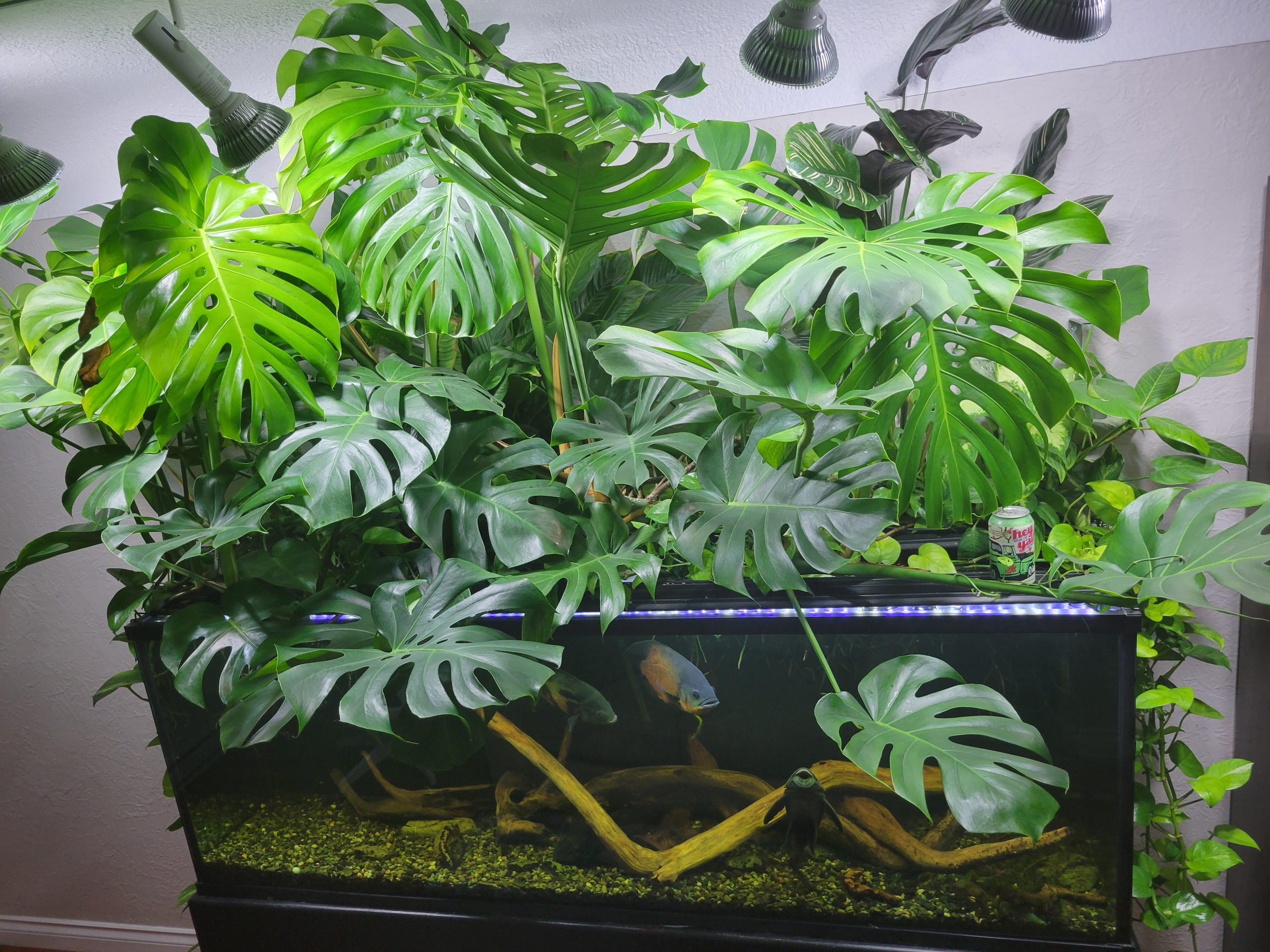
Yes, you can put a Monstera in a fish tank. This beautiful plant can thrive in water and add a unique touch to your aquarium.
Monstera plants are popular for their striking leaves and easy care. Adding one to your fish tank can enhance the look and provide natural benefits. The plant helps to filter the water, creating a healthier environment for your fish. Plus, it can offer hiding spots and reduce stress for your aquatic pets.
In this post, we will guide you through the steps of placing a Monstera in your fish tank. From choosing the right plant to maintaining it, you’ll learn everything you need to know to create a beautiful and balanced aquarium.
Selecting The Right Monstera
Choosing the right Monstera for your fish tank ensures a healthy environment. Monstera plants come in different varieties, each with unique features. Selecting a healthy plant is crucial for the well-being of both the plant and the fish.
Types Of Monstera
There are several types of Monstera. The most common is Monstera deliciosa. This type is known for its large, split leaves. Another popular type is Monstera adansonii. It has smaller leaves with unique holes. Both types can thrive in a fish tank. Choose the one that fits your tank size and aesthetic.
Choosing Healthy Plants
Healthy plants ensure the best results. Look for plants with vibrant green leaves. Avoid plants with yellowing or brown spots. Check the roots as well. Healthy roots are white and firm. Avoid plants with mushy or black roots. They indicate poor health. Good quality Monstera will adapt better to the tank environment.

Preparing The Fish Tank
Before adding a Monstera plant to your fish tank, it is important to prepare the tank properly. A clean and well-set environment helps ensure the health of both your fish and the plant. Follow these steps to create an ideal setting for your fish tank.
Cleaning The Tank
The first step in preparing your fish tank is to clean it thoroughly. Use warm water and a soft cloth to wipe the inside of the tank. Avoid using soap or chemical cleaners as they can harm your fish.
- Remove any old decorations or plants.
- Scrub the tank walls to remove algae and dirt.
- Rinse the tank with warm water multiple times.
Ensure the tank is completely clean before moving to the next step. Cleanliness is crucial to prevent any contamination.
Setting Up The Environment
After cleaning the tank, set up a suitable environment for your Monstera plant and fish. Choose the right substrate, such as gravel or sand, to place at the bottom of the tank.
- Add a layer of substrate, about 2-3 inches thick.
- Fill the tank with dechlorinated water.
- Install a filter and heater if needed.
- Set up proper lighting for plant growth.
Creating a stable and healthy environment is key. Ensure the water parameters are suitable for both the Monstera plant and your fish. Monitor the water temperature and pH levels regularly to keep everything balanced.
Planting Monstera In The Tank
Planting a Monstera in a fish tank can create a beautiful, natural look. This plant adds greenery and improves the tank’s environment. Monstera is known for its large, split leaves and can thrive in water.
First, prepare the tank for the Monstera. Ensure the water is clean and at the right temperature. Monstera plants prefer warm, tropical conditions. Next, choose a healthy Monstera plant. Look for bright green leaves and strong roots.
Positioning The Plant
Positioning the Monstera is crucial. Find a spot where the plant has enough space. Avoid placing it too close to the tank’s sides. This allows the leaves to spread naturally. Ensure the roots are submerged in the water. The leaves should stay above the waterline.
Consider the light source. Monstera plants need indirect light. Place the tank where it gets filtered sunlight. Avoid direct sunlight, as it can harm the plant and the fish.
Ensuring Stability
Ensuring the Monstera stays stable in the tank is important. Use small stones or gravel to anchor the roots. This keeps the plant from floating. You can also use a plant anchor or fishing line.
Check the stability regularly. Make sure the plant remains in place. Healthy root growth will help with stability. The plant will become more secure over time.
By following these steps, you can successfully plant a Monstera in a fish tank. This adds beauty and benefits to the aquatic environment.
Maintaining Water Quality
Maintaining water quality is crucial when adding a monstera to a fish tank. Proper water conditions ensure the health of both the plant and the fish. Here are some key aspects to focus on.
Monitoring Ph Levels
Monitoring pH levels is essential for a healthy aquarium. Monstera plants thrive in slightly acidic to neutral water.
- Ideal pH range: 6.0 to 7.5
- Use a pH testing kit to check levels weekly
- Adjust pH using aquarium-safe products if needed
Regular Water Changes
Regular water changes help maintain optimal water quality. They remove waste and replenish essential nutrients.
- Change 10-20% of the water weekly
- Use a gravel vacuum to clean debris from the substrate
- Ensure new water matches the tank’s temperature and pH
Keeping the water clean prevents algae growth and ensures a healthy environment for both the monstera and the fish.
Caring For Monstera
Placing a Monstera in a fish tank can create a striking display. Ensure the roots stay above water to prevent rot. Choose a spot with indirect light for best growth.
Growing Monstera in a fish tank creates a unique environment. These plants need proper care to thrive. Here are some tips to help your Monstera grow healthy.Pruning And Trimming
Regular pruning keeps your Monstera healthy. Cut dead or yellow leaves to encourage new growth. Trim the roots if they grow too large. This keeps them from overcrowding the tank. Use clean scissors to avoid infections. Pruning also helps maintain the plant’s shape. Trim the leaves that are blocking light for other plants.Nutrient Requirements
Monstera needs nutrients to thrive. In a fish tank, fish waste provides some nutrients. But it might not be enough. Use a liquid fertilizer made for aquatic plants. Add the fertilizer every two weeks. Follow the instructions on the package. Make sure the fertilizer is safe for fish. Over-fertilizing can harm your fish and plants. Monitor your plant’s growth and adjust as needed. “`Fish Compatibility
Adding a Monstera plant to a fish tank can create a stunning and natural habitat. But, not all fish are compatible with this setup. Ensuring fish compatibility is crucial for the health of both the plant and the fish.
Choosing Compatible Fish
When selecting fish for a Monstera-filled tank, consider their behavior, size, and diet. Some fish may damage the plant or be harmed by it.
- Small and peaceful fish are usually the best choice.
- Fish that do not nibble on plants are ideal.
- Fish that prefer a calm environment suit well.
Examples of compatible fish include:
| Fish Type | Characteristics |
|---|---|
| Neon Tetras | Small, peaceful, and plant-friendly. |
| Guppies | Colorful, easy-going, and non-nibblers. |
| Betta Fish | Solitary, calm, and plant-loving. |
Behavior Observations
After introducing fish into the tank, observe their behavior closely. Watch for signs of stress or aggression.
- If a fish nibbles the Monstera, it may not be suitable.
- Check if the fish is hiding or showing signs of stress.
- Ensure the fish are swimming freely and interacting well.
Regular observations help maintain a balanced and healthy environment. Adjust the setup if needed to ensure compatibility.
Troubleshooting Common Issues
Setting up a Monstera plant in a fish tank can be rewarding. But sometimes, issues arise. Understanding and addressing these problems ensures a healthy environment for both the plant and the fish. Here, we’ll explore common issues and how to troubleshoot them.
Dealing With Algae
Algae can be a frequent issue in fish tanks. They thrive in the same conditions as your Monstera. Excess light and nutrients often lead to algae growth.
- Reduce light exposure: Limit the tank’s light to 8 hours a day.
- Control nutrients: Avoid overfeeding fish. Excess food decomposes and feeds algae.
- Introduce algae eaters: Fish like Siamese algae eaters or snails can help manage algae.
Regular tank cleaning is also crucial. Clean the tank walls and decorations to prevent algae buildup. Algae can compete with your Monstera for nutrients, so keeping it under control is vital.
Addressing Plant Health
Maintaining the health of your Monstera in a fish tank can be challenging. Here are some common issues and solutions:
| Issue | Solution |
|---|---|
| Yellowing leaves | Check for overwatering. Ensure the roots are not constantly submerged. |
| Stunted growth | Check nutrient levels. Add aquatic plant fertilizer if needed. |
| Root rot | Ensure proper water circulation. Avoid stagnant water around the roots. |
Regularly check the plant’s roots and leaves. Healthy roots are firm and white. Yellow or mushy roots indicate problems. Trim any damaged roots or leaves to promote healthy growth.
Keeping your Monstera healthy requires monitoring and adjustments. Each tank is unique, so observe your plant and make changes as needed.

Frequently Asked Questions
Can Monstera Live In A Fish Tank?
Yes, Monstera can live in a fish tank. Ensure it receives adequate light and nutrients. Proper care is essential for its growth.
How Do You Put Monstera In A Fish Tank?
To put Monstera in a fish tank, clean its roots first. Place the roots in substrate or anchor them.
What Are The Benefits Of Monstera In A Fish Tank?
Monstera helps oxygenate the water and provides hiding spots for fish. It also enhances the tank’s aesthetics.
Does Monstera Need Special Care In A Fish Tank?
Monstera needs regular light, nutrient-rich water, and occasional trimming. Monitor water quality to ensure plant health.
Conclusion
Adding a Monstera to your fish tank can enhance its beauty. Ensure proper care for both plant and fish. Monitor water quality and lighting closely. Choose a suitable tank size for healthy growth. Regular maintenance keeps your aquarium thriving. Experiment with different setups to find what works best.
Enjoy the natural, vibrant look of your aquatic garden. Your fish will appreciate the lush environment. Happy fishkeeping!
Leave a Reply